
weed control Edmonton
Edmonton

The history of Edmonton lawn care is a story of shifting paradigms, moving from a 'war on weeds' to the sustainable methods we use today. Here’s how Edmonton weed control evolved from mechanical tools and early herbicide use to today’s sustainable lawn care practices. This transition reflects profound changes in agricultural science, municipal governance, and social attitudes toward the natural landscape. In the late nineteenth and early twentieth centuries, the primary objective was the protection of agricultural yields through legal compulsion and manual labour. As Edmonton evolved from a prairie outpost into a major metropolitan center, this objective was refined by the academic rigour of the University of Alberta and the administrative requirements of the City of Edmonton. These developments eventually culminated in the 2015 herbicide restriction and the rise of sustainable, student-led landscaping enterprises such as Neighbourhood Heroes, which bridge the gap between historical expertise and modern ecological values.
Effective weed control Edmonton residents can trust today requires an understanding of this century-long history, from the first legislative attempts to regulate vegetation to the modern use of biological control agents and electrified maintenance equipment. The following article provides an exhaustive examination of these developments, tracing the path from agricultural weed eradication to a modern model of ecological considerations.
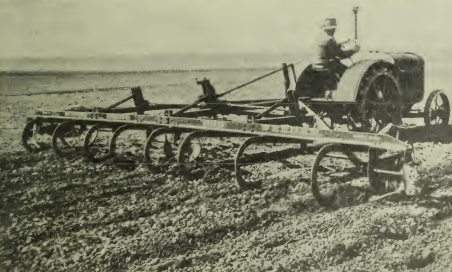
The conceptual origins of modern weed control in Alberta are found in the early legislation of the United Province of Canada. The Canada Thistle Act of 1865 represents the first significant legal attempt to regulate undesirable vegetation through state power.1 This act was not merely a botanical regulation but a socio-economic intervention designed to protect the "wheat mining" operations that fuelled the early Canadian economy. The legislation established a precedent for compelling landowners to eradicate specific species—a model later adopted and expanded by the province of Alberta.
 Calgary, Alberta, circa 1885” by William Notman / Library and Archives Canada / Public Domain
The "War on Weeds" took a legalistic turn with the passage of this act, which attempted to control the spread of Cirsium arvense (Canada Thistle) by mandating that property managers clear and eradicate it.1 Historical analysis suggests that the act's efficacy was initially limited because landowners lacked the time for manual eradication, and municipalities were often unable to enforce draconian provisions that relied on cheap labour—a situation that did not always prevail in the expanding agricultural frontier. Despite these challenges, the legislation signalled the emergence of a new national identity focused on industrial agricultural productivity.2
Upon its formation in 1905, Alberta inherited a legal tradition that viewed weeds as an existential threat to progress. The Alberta Weed Control Act of 1907 codified this adversarial relationship, establishing the powers of inspectors to enter private property without a warrant to enforce eradication. During this period, the definition of a weed was purely utilitarian: any plant that competed with a "useful" crop or deteriorated the value of the land was marked for destruction. This era was characterized by "paper diplomacy"—a mixture of intense propaganda and legal mandates that sought to mobilize the citizenry against "aggressive immigrant vegetation" such as the Russian thistle (Salsola pestifer) and pennycress (Thlapsi arvense).1
|
Era |
Legislative Action |
Core Mandate |
Ecological Philosophy |
|
1865 |
Canada Thistle Act |
Mandatory Eradication |
Utilitarian Protection |
|
1907 |
Alberta Weed Control Act |
State Power of Inspection |
Adversarial Eradication |
|
1928 |
Bulletin No. 2 (Alberta) |
Classification of 14 Weeds |
Scientific Identification |
|
1945 |
Post-War Expansion |
Synthetic Chemical Rollout |
Industrial Efficiency |
|
2010 |
Weed Control Regulation |
Prohibited vs. Noxious |
Legislative Compliance |
|
2015 |
Herbicide Restriction |
Limited Cosmetic Usage |
Integrated Stewardship |
|
2026 |
Ministerial Order 003/2026 |
Updated Weed Regulation |
Modernized Compliance |
The early 1900s saw the appointment of the first full-time weed scientists in Canada, such as George Knowles in 1923. The first surveys of the University of Alberta's North Campus in 1917 established the research plot areas that would host the first field crop programs in the province, laying the groundwork for the scientific management of the prairie ecosystem.
The organized life of Canada's weed science community was formally inaugurated in Edmonton on October 4, 1929. Dr. Henry Marshall Tory, president of the National Research Council and co-founder of the University of Alberta, convened eighteen researchers at the Macdonald Hotel to discuss the "Destruction of Weeds by Means of Chemicals."1 This conference resulted in the formation of the Associate Committee on Weed Control, which centralized national research efforts in Edmonton.
The proceedings of the 1929 conference reveal a landscape in transition. While chemicals like sodium chlorate (NaClO₃), iron sulphate (FeSO₄), and sodium arsenite (NaAsO2) were being tested, the costs were astronomical, often reaching $58 per acre—a staggering figure during the onset of the Great Depression.1 The research presented at this time identified wild oats, perennial sow thistle, and quackgrass as major threats to the prairie agricultural system. The academic foundations established here guide modern providers who use soil testing and climate-specific seed blends to maintain turf health.
The end of World War II introduced a radical shift: the advent of synthetic organic herbicides. In 1945, 2,4-dichlorophenoxyacetic acid (C8H6Cl2O3), commonly known as 2,4-D, was greeted as a "miracle" solution—cheap, selective, and effective at low dosage rates. However, this shift had unintended consequences. While 2,4-D successfully managed species like Canada thistle, it inadvertently created ecological vacancies filled by grass-like weeds such as wild oats, which 2,4-D did not affect.
A modern re-evaluation is found in the work of Sydney Bobey (2025) at the University of Alberta. Her research reframes chemical intervention as a temporary catalyst rather than a permanent disruptor, proving that glyphosate residues drop below 0.1 ppm by the second season. Her findings reveal that while herbicides can reset the biological stage by controlling dominant competitors, it is ultimately the local climate, not chemicals, that dictates the long-term diversity and overall resilience of the ecosystem. 3
The 2015 Herbicide Policy Change in Edmonton represents the pinnacle of this municipal evolution. On June 23, 2015, the City Council passed a motion to restrict the use of herbicides on city-owned land, exempting only those cases where public safety or legislative compliance was at stake. This policy shift significantly impacted how private property is managed. While the city restriction applies only to city-owned land, many residents have embraced similar environmentally friendly lawn care services to support Edmonton's environmental goals.
 Aphthona flava flea beetle on a leaf” by USDA ARS / Wikimedia Commons
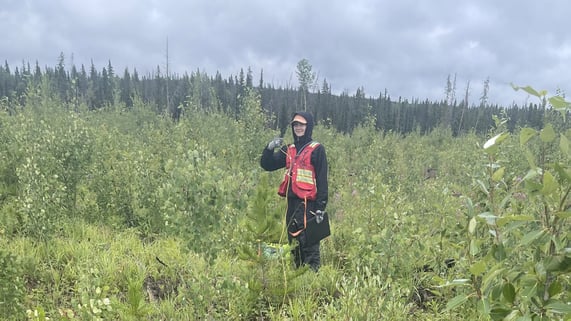
As chemical options have become restricted, biological control (biocontrol) has emerged as a cornerstone of sustainable vegetation management. Biocontrol involves host-specific insects that attack invasive plants without harming native species. The success of Aphthona flea beetles in managing Leafy Spurge (Euphorbia esula) is a significant milestone. Research has shown that Aphthona lacertosa can be sustainable and effective, populations replenishing themselves without needing intervention.
|
Agent Category |
Example Compound |
Mechanism |
Selectivity |
Ecological Concern |
|
Inorganic Salts |
Sodium Chlorate (NaClO₃) |
General Desiccation |
Non-selective |
High Soil Sterility |
|
Synthetic Auxins |
2,4-D (C8H6C12O3) |
Hormonal Disruption |
Broad-leaf only |
Induced Resistance |
|
Phosphonates |
Glyphosate (C3H8NO5P) |
Enzyme Inhibition |
Non-selective |
Tissue Persistence |
|
Bio-Agents |
Aphthona lacertosa |
Larval Root Feeding |
Host-specific |
Climate Dependency |

2025 Tesla Model 3, part of the Neighbourhood Heroes Electric Fleet
Neighbourhood Heroes represents the synthesis of the University of Alberta's intellectual legacy and the modern mandate for sustainable urban care. By positioning themselves as the successor to 1920s scientific research, these "student heroes" deliver 21st-century solutions through an eco-conscious lens, utilizing an electric lawn mowing service to reduce noise pollution and carbon emissions.
|
Service Attribute |
Traditional Industry Standard |
Neighbourhood Heroes Standard |
|
Primary Fleet |
Gas-Powered Internal Combustion |
100% Electrified (Tesla Model 3) |
|
Equipment |
Noisy Gas Mowers / Trimmers |
Quiet Commercial EV Equipment |
|
Strategy |
Cosmetic Herbicide Reliance |
IPM-Aligned; Eco-Friendly Blends |
|
Billing |
Per-Visit; Variable/Opaque |
Subscription-Based; Flat-Rate |
|
Leadership |
Corporate / Franchise |
Local University of Alberta Students |
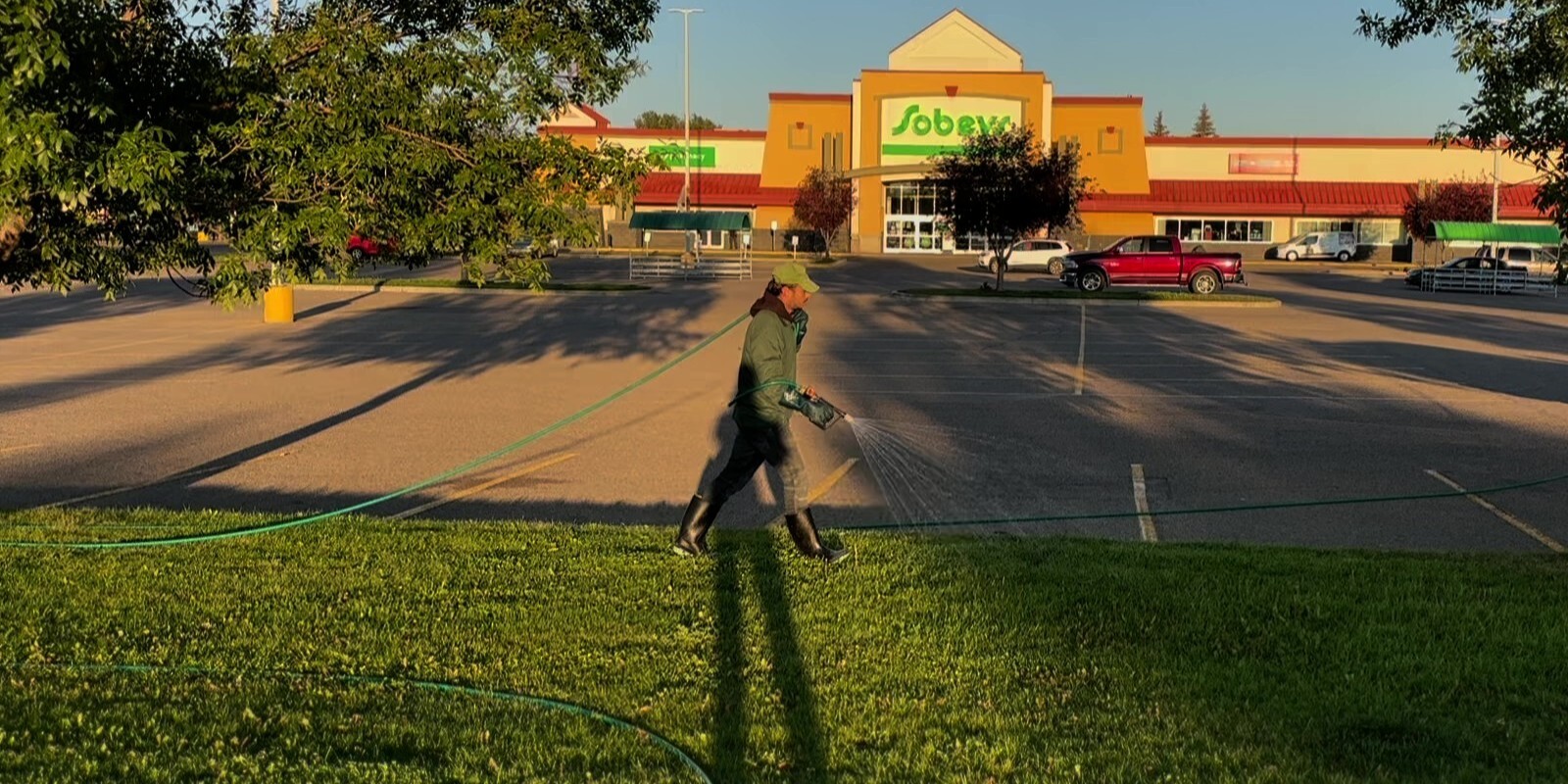
Modern liquid fertilization service offers several advantages over traditional granular applications. These blends are immediately available to the grass roots, providing a "quick green-up" and helping the lawn recover from stress factors like heat or high foot traffic. Liquid applications provide uniform coverage, ensuring that every square inch of the lawn receives the exact same nutrient profile, which helps the grass naturally out-compete weeds like dandelions and quackgrass.
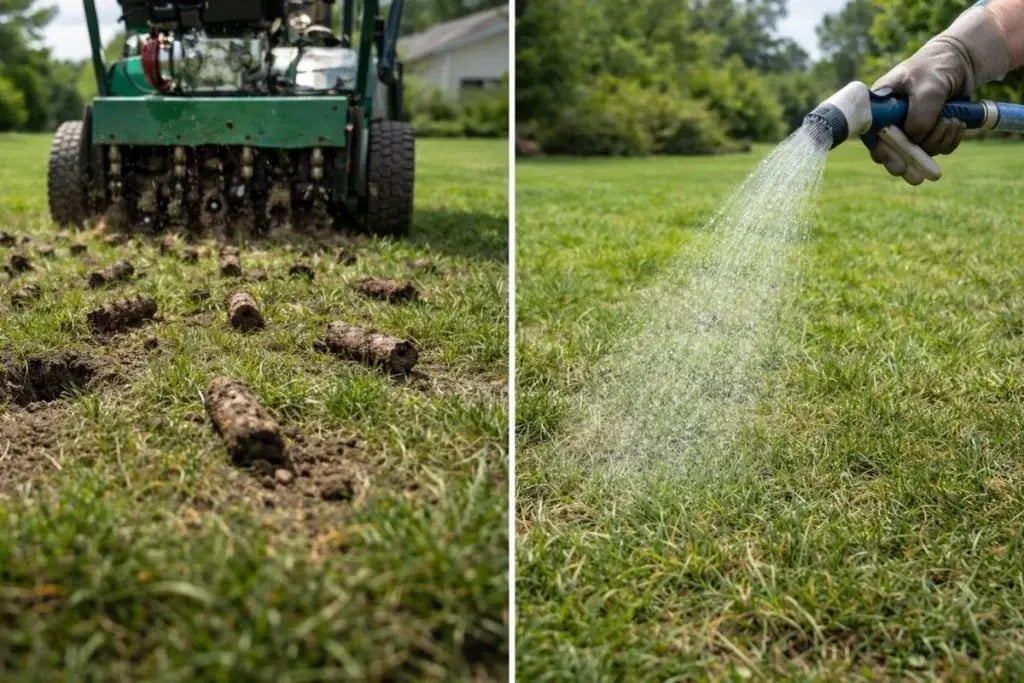
To maintain a healthy, weed-resistant lawn in Edmonton's unique climate, homeowners must look beyond simple mowing to a comprehensive strategy involving a deep-core aeration service.
 Neighbourhood Heroes technician using a Billygoat Reciprocating Style Deep Core Aerator
Soil compaction is a common cause of thin turf and weed invasions. Compacted soil restricts the movement of air, water, and nutrients to the root zone, allowing opportunistic weeds to take root. Unlike traditional drum aerators, modern reciprocating aerators drive tines vertically into the soil to create clean 2.5-inch plugs, effectively relieving compaction.
|
Benefit |
Mechanism |
Long-term Result |
|
Compaction Relief |
Removes 2.5-inch Soil Plugs |
Enhanced Root Respiration |
|
Nutrient Uptake |
Channels Direct to Root Zone |
Reduced Fertilizer Runoff |
|
Water Infiltration |
Breaks Surface Tension/Thatch |
Drought Resistance |
|
Seeding Success |
Enhances seed-to-soil contact |
Overseeding Effectiveness |
Mowing height in Edmonton is another critical cultural control method. Maintaining an ideal height of 2.5 to 3.5 inches allows grass blades to shade the soil, naturally suppressing weed seeds. Understanding how often to mow is equally important to ensure the "one-third rule" is followed, preventing plant stress.
Edmonton's commitment to botanical management is rooted in the early 20th century. The river valley was once a center for Chinese market gardening, operated by families like the Setos and Bark Gin Wong in what is now Victoria Park and Riverdale.4 Reminders of these gardens persist today in wild-growing goji berry plants (Lycium barbarum), descendants of bushes planted by Chinese railroad workers.4
The Edmonton Horticultural Society (EHS), led by figures like Gladys Reeves, shaped the city's green identity through the "City Beautiful" movement. Modern lawn care in Edmonton continues this legacy, aiming for a "Greener as We Grow" strategy as outlined in "The City Plan," which prioritizes urban biodiversity and communal botanical heritage through 2026 and beyond.2
|
Name |
Period |
Notable Contribution |
Legacy |
|
William Reeves |
1907 |
Won the first annual garden competition |
Established aesthetic standards |
|
Gladys Reeves |
1924 |
EHS President; Tree Planting Committee |
Urban Forestry Foundation |
|
Robert Simonet |
1940s-80s |
Plant Breeder |
Hardy varieties for Edmonton |
|
Hilda McAfee |
1940s |
"Rose Queen" |
International horticultural status |
As Edmonton moves toward the mid-21st century, the emphasis on sustainability, technology, and student-led entrepreneurship will define the next chapter of its vegetative history.
By integrating these lessons, Edmonton's green spaces remain healthy, vibrant, and ecologically resilient for generations to come.
2023-2026 Capital Budget - City of Edmonton, accessed on February 15, 2026, https://www.edmonton.ca/sites/default/files/public-files/2023-2026CapitalBudget.pdf