
Edmonton snow services
Edmonton snow removal
Edmonton winter maintenance
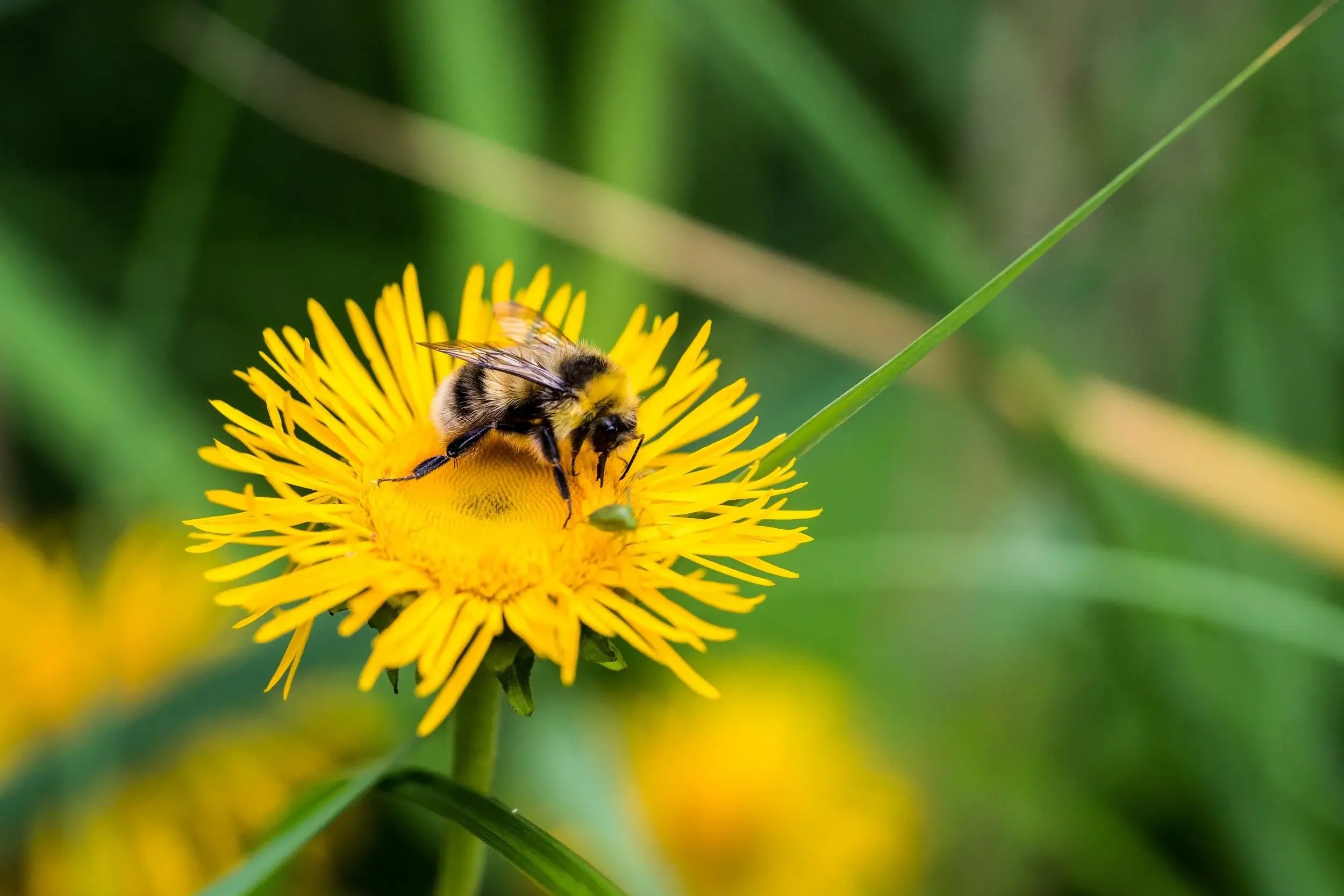

Many Edmonton homeowners feel torn about dandelions. They know dandelions are weeds. They also know bees visit them. So when it is time to control weeds in the lawn, a real question shows up: Am I hurting pollinators by getting rid of dandelions?
The honest answer is more nuanced than most online takes. Yes, pollinators do use dandelions. But no, letting dandelions take over your lawn is not the best way to help pollinators. Pollinator Partnership’s planting guide for the Aspen Parkland region, which includes Edmonton, notes that dandelions can provide nectar in early spring before other flowers open. But the same broader body of pollinator research points to a much better strategy: diverse, intentional, season-long habitat with multiple flowering plants and better habitat structure.
That is the key point of this article. You do not need to choose between a clean lawn and caring about pollinators. In fact, if you really want to make a difference, a responsibly managed lawn plus an intentionally designed pollinator habitat is stronger than simply tolerating weeds.
This is a reasonable conflict to have. Dandelions are one of the most visible weeds in a lawn, and they are also one of the most visible flowers that bees visit in spring. That makes them easy to defend online and easy to feel guilty about controlling.
The problem is that the online conversation often collapses into a lazy false choice:
That is not a serious way to think about yard ecology. Edmonton and Alberta guidance on pollinator support does not tell homeowners to surrender their lawns to invasive weeds. It points people toward native plants, pollinator habitat, and intentional habitat design.
Yes. They do.
Pollinator Partnership’s regional planting guide explicitly notes that dandelions provide nectar in early spring before other flowers open. A review in the Journal of Integrated Pest Management also notes that a variety of pollinators readily use turfgrass weeds such as white clover and dandelion. In other words, pretending dandelions are ecologically worthless would be sloppy.
That part of the argument is true.
The problem is that “pollinators use dandelions” is not the same claim as “dandelions are the best pollinator strategy.”
Those are very different ideas.
Research on urban pollinators highlights the importance of floral richness, floral diversity, and habitat quality, rather than the presence of a single common weed. A Frontiers study found that urban landscapes with greater floral cover and floral diversity support better bumble bee foraging. Research on urban meadow-style plantings and intentionally enhanced urban habitats points in the same direction: pollinators do better when the habitat is richer, more varied, and more deliberately designed.
So yes, dandelions can help a little. But that does not make a dandelion-heavy lawn a strong pollinator plan.
The strongest pro-dandelion argument is the early-spring argument, and it deserves to be taken seriously.
Early in the season, floral resources can be limited. Pollinator Partnership’s regional guide recognizes this directly when it notes the value of dandelions before other flowers open. That is why the “leave the dandelions for the bees” message resonates. It is built on a real ecological point: early food matters.
But this is where the argument usually stops too early. Pollinators do not need one yellow flower for two weeks. They need a succession of resources throughout the season, along with habitat structure and nesting support.
That is the difference between a talking point and a real plan.
If you want to support pollinators meaningfully, the goal is not just to have flowers. The goal is to have the right kinds of resources at the right times.
Pollinators benefit from:
Pollinator Partnership’s Canadian planting guides are built around the idea of selecting plants by region, so pollinators have the right food and habitat. Edmonton’s own natural yard guidance also promotes native plants and habitat creation to support urban biodiversity.
A lawn full of dandelions does not really achieve that. It provides pollinators with a very common, opportunistic resource. That is nothing, but it is not enough.
This is the part the internet often gets wrong.
Letting weeds take over may feel environmentally friendly, but it is usually better for the weeds than it is for pollinators. A weed-heavy lawn is not the same thing as a pollinator habitat. It is usually a sign of passivity, not ecological design.
That matters for three reasons.
First, weeds like dandelions are not the only flowers pollinators can use, and often not the most valuable long-term option. Diverse, intentional planting is stronger.
Second, letting weeds dominate the lawn usually does not build the kind of season-long bloom continuity that pollinators actually need.
Third, it is not best for homeowners either. A lawn overtaken by weeds is harder to manage, harder to restore, and usually reflects a yard strategy that reacts rather than plans.
So no, “just let the weeds grow” is not the most thoughtful environmental position. It is usually the easiest one.
This is the most important idea in the whole article.
If you really want to help pollinators in Edmonton, build habitat on purpose.
That means things like:
Edmonton’s natural yard resources point homeowners toward exactly this kind of approach, and Pollinator Partnership’s regional guides provide a framework for selecting plants by ecosystem. Research on urban pollinator habitat supports it too: small but intentional habitat improvements can make urban spaces meaningfully better for pollinators than simple unmanaged turf.
That is the smarter trade:
If you want your yard to do more for pollinators, better moves include:
Planting early-, mid-, and late-season flowers so pollinators are not relying on one bloom window. Pollinator Partnership’s regional materials are built around this exact idea.
Use native or region-appropriate pollinator plants where practical. Edmonton’s natural yard resources and regional planting guides both support this direction.
Creating dedicated beds, strips, or naturalized zones rather than expecting the lawn to do every ecological job. Research on urban flowering habitat supports the value of intentionally improved patches.
Reducing unnecessary pesticide pressure and using integrated pest management thinking rather than blanket spraying. Pollinator Partnership’s guides explicitly encourage IPM practices.
This is a stronger, more coherent pollinator strategy than tolerating whichever weeds happen to be winning.
Yes.
You can feel far less guilty about controlling dandelions in your lawn if you replace passive weed tolerance with something more intentional and more effective.
That is the real takeaway. An environmentally friendly weed-control program can help manage unwanted weeds in the lawn. At the same time, intentional pollinator habitat can do a much better job of supporting bees and other pollinators than a lawn full of dandelions ever could.
Those two things are not in conflict. They are a better combination.
A clean lawn is not automatically anti-pollinator. A weed-filled lawn is not automatically pro-pollinator. The real question is whether you are managing your yard thoughtfully.
Dandelions are not useless. Pollinators do use them, and they can provide some early-season forage. But that does not mean letting weeds take over your lawn is the best way to help pollinators in Edmonton. The research points to a better answer: diverse, intentional, season-long habitat.
So if you care about pollinators, do more than tolerate weeds.
Build better habitat on purpose.
And if you care about your lawn, you can control dandelions with a lot less environmental guilt than the internet sometimes suggests. A responsibly managed lawn plus intentionally designed pollinator habitat is not a compromise. It is the smarter ecological choice.
If you would like professional help managing weeds in your Edmonton lawn, feel free to reach out. We would love to help you out.