Healthy, nutrient‑rich soil is the foundation of a lush, resilient lawn. Poor soil leads to thin turf, weed invasions, and stressed grass. Follow these steps to transform your soil and give your lawn the best possible start.
1. Test Your Soil First
Before making changes, know what you’re working with. A soil test reveals pH imbalances and nutrient deficiencies.
- DIY Kits are available at garden centres.
- Professional Analysis gives a detailed report.
2. Adjust pH for Optimal Nutrient Uptake
Most cool‑season grasses prefer a pH between 6.0 and 7.0.
- If below 6.0: Apply lime to raise pH.
- If above 7.0: Use elemental sulfur to lower pH.
Accurate pH ensures your grass can access nutrients—don’t skip this step!
3. Incorporate Organic Matter
Improving soil structure helps roots breathe, absorb water, and resist compaction.
- Top‑dress with Compost: Spread a thin (¼″) layer of well‑aged compost over your lawn in early spring or fall.
- Use Worm Castings: Mix into problem areas to boost microbial activity.
- Mulch Grass Clippings: Leave clippings on the lawn to return nitrogen and organic matter.
4. Aerate to Relieve Compaction
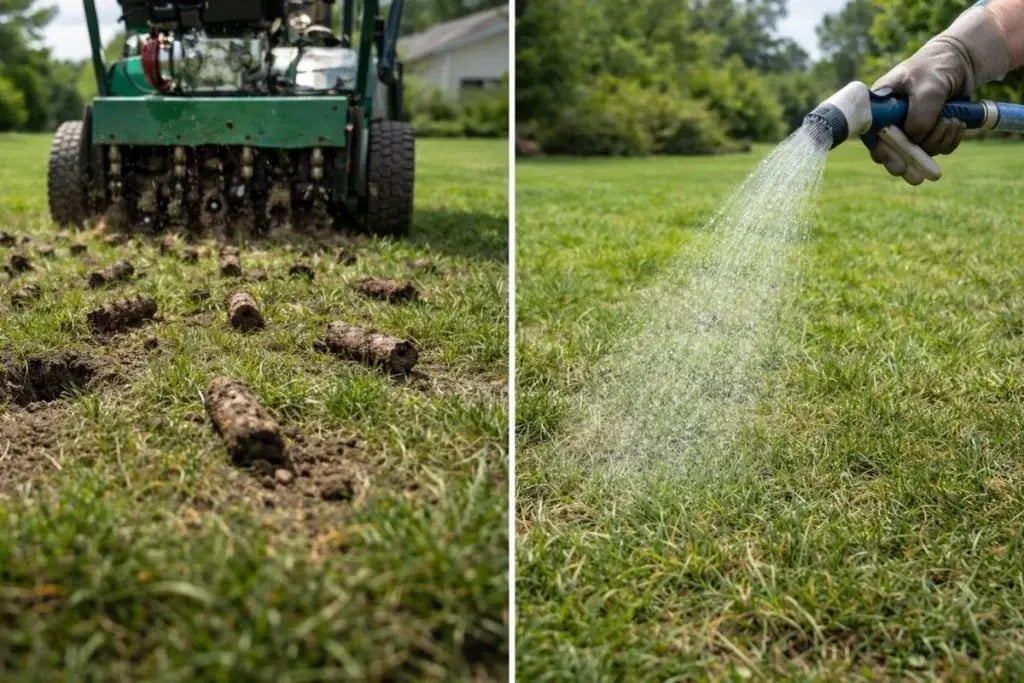
Compacted soil restricts root growth and water infiltration. Our Deep‑Core Aeration service uses a reciprocating aerator to pull 2.5″ plugs, mixing soil and creating air channels.
🔗 Compare our aeration options
5. Feed with Liquid Fertilization
Once your soil is loose and rich in organic matter, provide balanced nutrients with our liquid fertilization system. Liquid feeds deliver immediately available nitrogen, phosphorus, and potassium.
🔗 See our liquid fertilization plans
6. Maintain Moisture & Drainage
- Deep, Infrequent Watering: Aim for 2–3× per week for 1 hour each—learn more in our watering guide.
- Improve Drainage: Add sand or gypsum to clay‑heavy spots to reduce puddles.
7. Overseed to Fill Bare Spots
A thick lawn helps suppress weeds and hold soil in place. After aerating, spread seed suited to Edmonton’s climate.
🔗 Find the best grass seed blends
🔗 Learn when to overseed
8. Regular Monitoring & Maintenance
- Inspect Quarterly: Check for compaction, pH shifts, or nutrient gaps.
- Repeat Compost Top‑dresses: Refresh organic matter each year.
- Stay on Schedule: Combine aeration, fertilization, and overseeding into an annual plan.
Next Steps & Expert Guidance
Improving soil quality takes time and consistency. If you’d like personalized support, contact us to set up a soil‑health consultation and tailored lawn‑care plan. A strong soil foundation means a healthier lawn—for years to come!