

Edmonton snow services
Edmonton snow removal
Edmonton winter maintenance
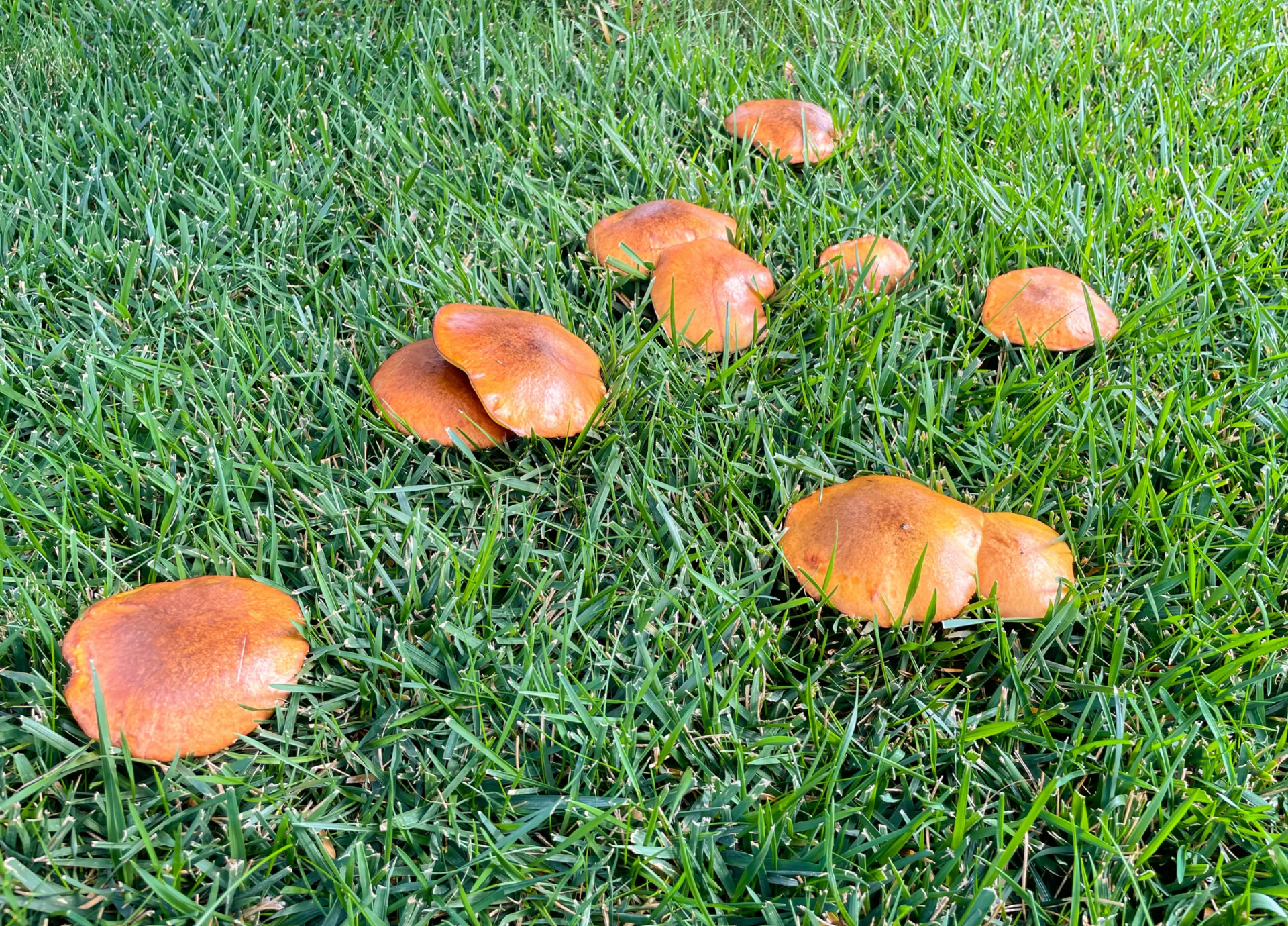

After a stretch of wet weather in Edmonton, it is common for mushrooms to start popping up in lawns almost overnight. For many homeowners, that feels like an immediate bad sign. The lawn was fine a week ago, then the rain came, and suddenly mushrooms sprouted across the grass. It is easy to assume the lawn is diseased, the soil is unhealthy, or the grass is under attack.
Most of the time, that is not what is happening.
In most lawns, mushrooms are simply the visible fruiting bodies of fungi already living in the soil. Those fungi usually feed on organic matter such as old roots, buried wood, stumps, thatch, or other decaying material below the surface. When the soil stays wet and conditions are right, they produce mushrooms. So in many cases, mushrooms are not the real problem. They are a sign that moisture and decomposition are lining up in the soil.
That said, not every mushroom situation in a lawn is the same. Some are mostly cosmetic. Some are just a nuisance after rain. And some, especially the fairy ring, can point to a more serious turf issue that affects how water moves through the soil and how well the lawn performs.
That is why the right question is not just “How do I kill the mushrooms?” The better question is, “What kind of mushroom problem is this, and what actually helps?”
Usually, no.
Most lawn mushrooms do not attack the grass itself. They are decomposers. Their job is to break down organic material in the soil and recycle nutrients. In many cases, the lawn can look perfectly healthy apart from the mushrooms. The mushrooms may be ugly, inconvenient, or concerning, but they are often not evidence of a turf disease.
That is the first thing homeowners need to understand. Mushrooms in a lawn are often more like a symptom of wet conditions and buried organic matter than a sign that the grass is infected.
The exception is when the fungi begin changing the soil environment in ways that stress the turf. That is where the fairy ring becomes important, and it is why some mushroom problems are more serious than others.
Rain is usually the trigger, not the root cause.
Fungi live in the soil year-round. What changes after long rainy periods is the environment around them. Moisture increases, organic matter softens and breaks down faster, and the fungi respond by producing fruiting bodies, which are the mushrooms you can see above ground.
That is why mushrooms often seem to appear suddenly. They were not created overnight. The fungus was already there. The rain simply created the conditions that made it fruit.
This is also why mushrooms often appear in the same areas repeatedly:
The mushroom itself is only the visible part. The real fungal network, called the mycelium, is underground.
One of the biggest mistakes homeowners make is treating every lawn mushroom like the same issue. They are not.
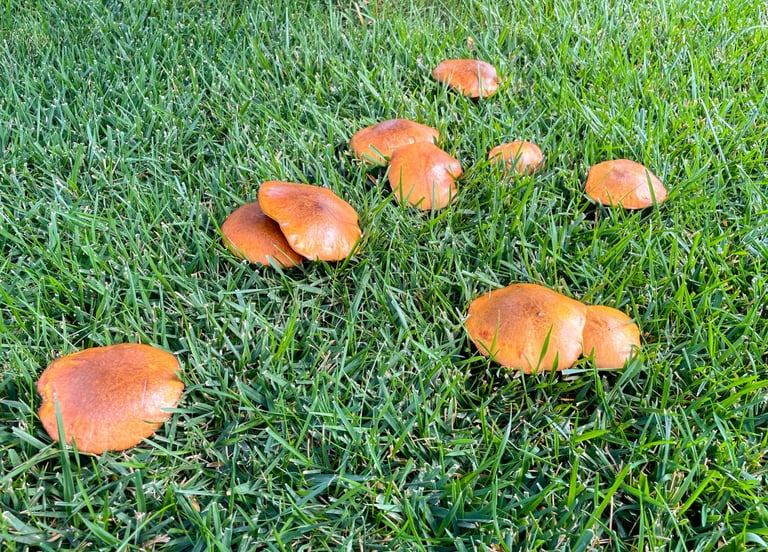
These are the most common and are usually the least serious. They often appear after wet weather, sometimes in clusters, sometimes individually, and are usually tied to decomposing organic material in the soil. They are mostly a cosmetic issue unless children or pets may eat them.
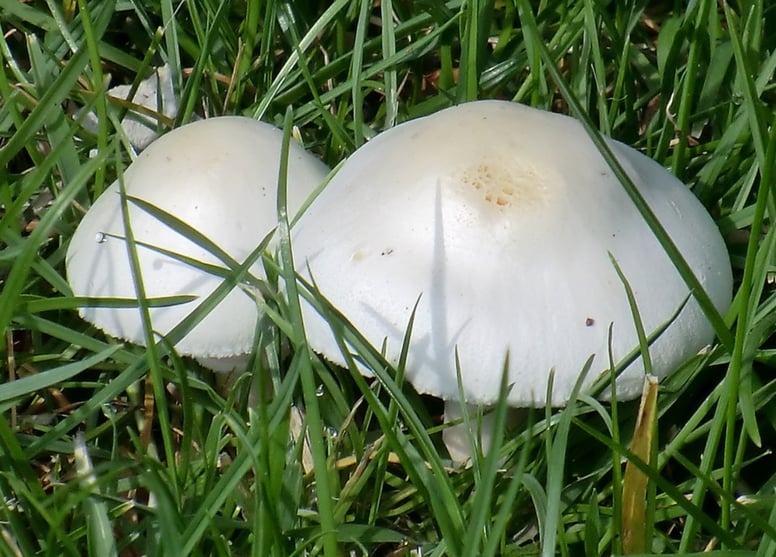
Puffballs can also show up in lawns after wet weather. They are usually rounder and more obvious than typical mushrooms. Like other lawn fungi, they are often decomposers and are usually more of an appearance issue than a turf health issue.
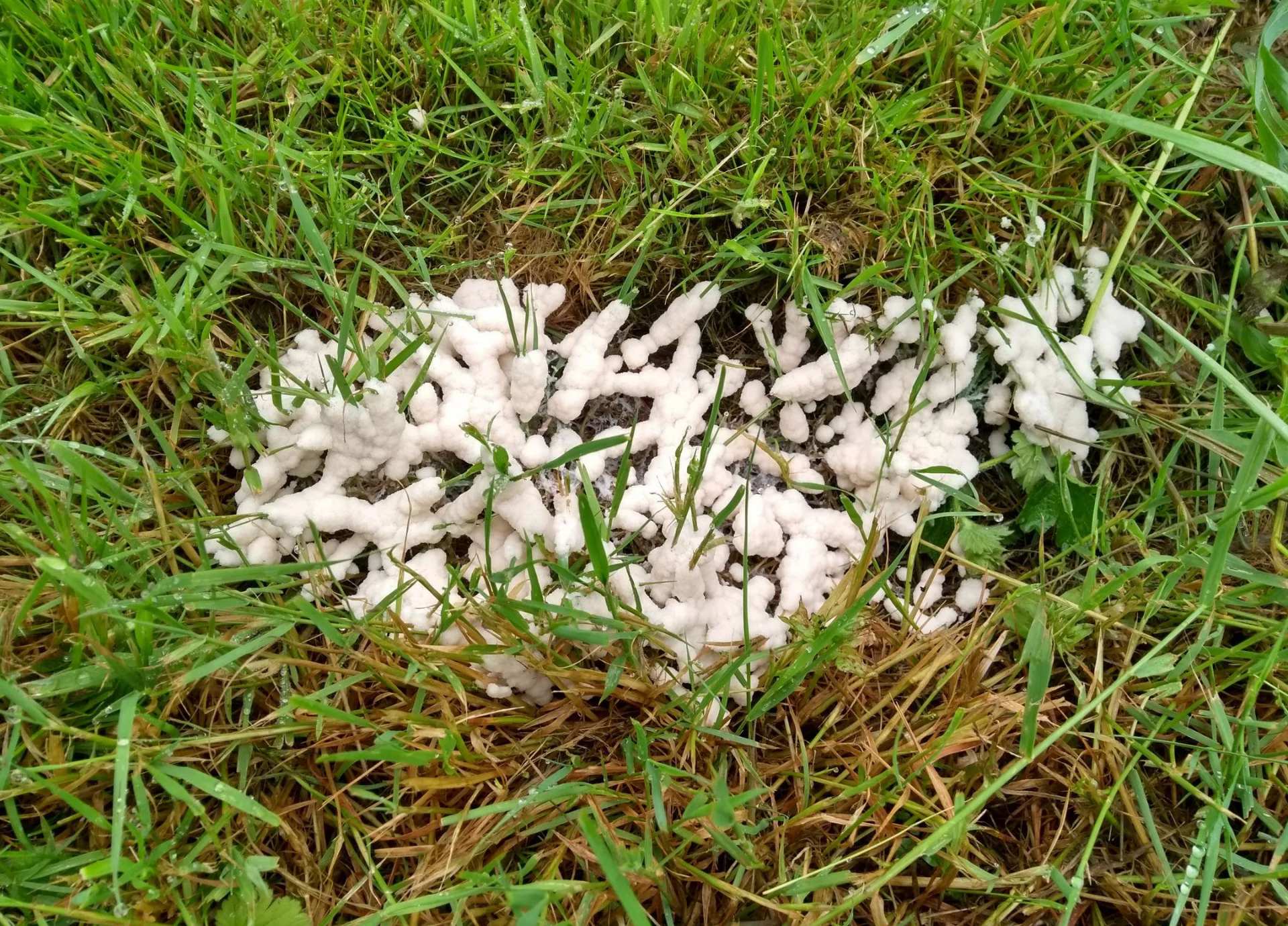
Slime molds are often confused with mushrooms, but they are not true fungi. They can appear as odd, slimy, crusty, or foamy patches on the lawn during warm, wet weather. They usually look strange, but they are mostly harmless and often disappear on their own.
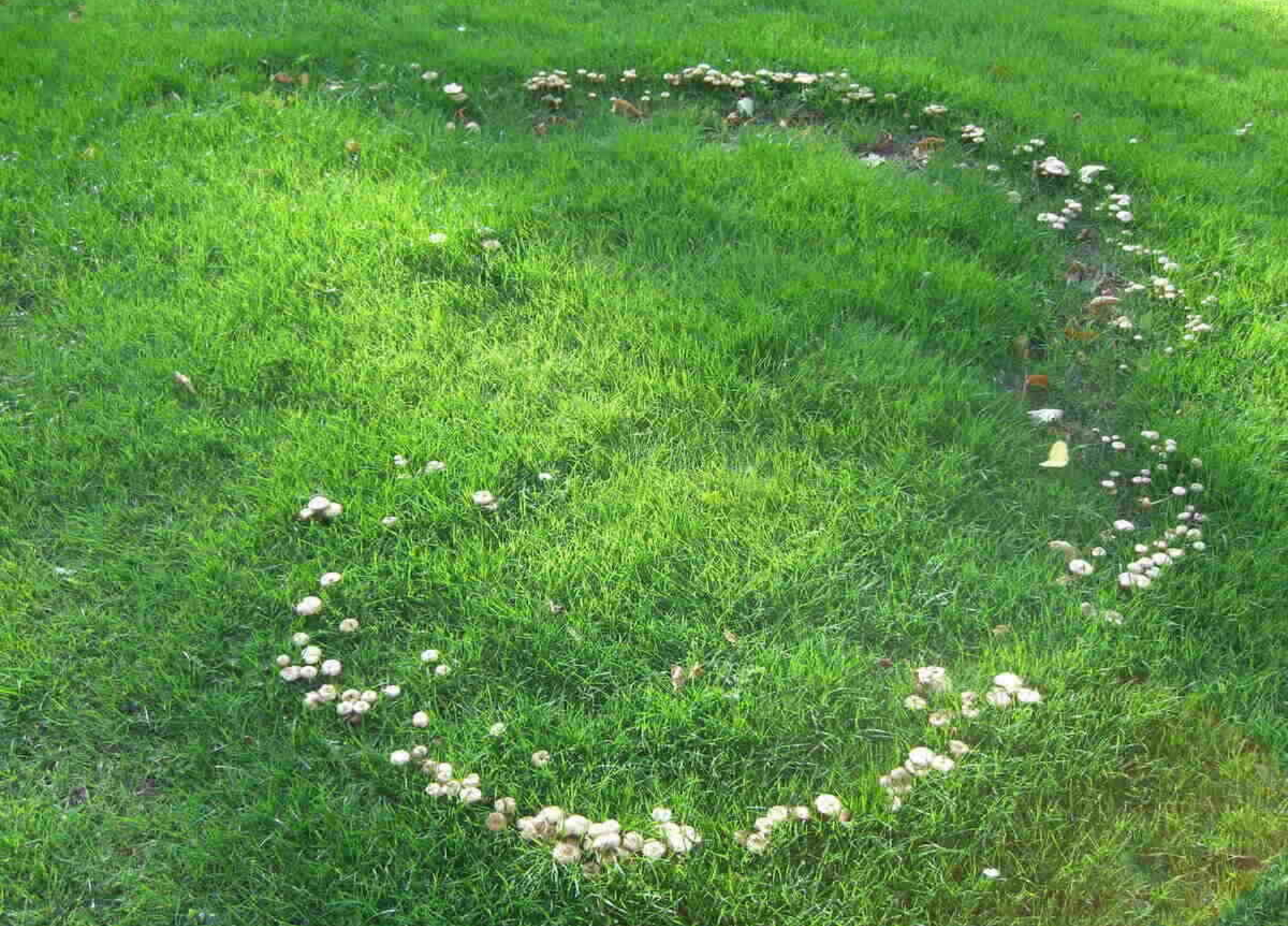
This is the one mushroom-related lawn issue that matters most from a turf-management perspective.
Fairy rings can show up in three ways:
This is the category homeowners should take more seriously, because it is not just about what is growing above the surface. It is about what the fungus may be doing below the surface.
Sometimes mushrooms feed on old roots, buried lumber, old stumps, or leftover organic debris from construction. In those cases, they may appear in the same area year after year. If mushrooms repeatedly appear near trees, trunks, or visible woody material, the underlying cause may be wood decay rather than a general lawn problem.
Fairy rings are caused by fungi growing outward through the soil, often feeding on buried organic matter. As the fungal colony expands, it can create circular or arc-shaped patterns in the lawn.
In some cases, the effect is mostly visual. The grass in the ring may turn darker green because fungal activity changes nutrient availability in the soil. In other cases, the fungus makes the soil repel water. That is when the fairy ring becomes a more serious problem.
This is why homeowners sometimes describe the same confusing pattern:
At that point, the issue is no longer “mushrooms in the lawn.” The issue is that the soil itself may have become water-repellent.
This is the most important concept in the whole article.
Some fungi associated with a fairy ring can change the soil enough that water stops soaking in properly. Instead of absorbing moisture evenly, the soil becomes hydrophobic, meaning it starts to repel water.
When that happens, the lawn can dry out even during periods when the rest of the yard seems adequately watered. The homeowner sees stressed turf and assumes the area needs more water, but the deeper problem is that the water is not penetrating properly in the first place.
That is why some fairy-ring areas stay dry, thin, and weak even when the rest of the lawn looks normal.
This is also why the strongest mushroom-related lawn advice is not just “pick the mushrooms.” The visible mushrooms are often the least important part of the problem.
For most Edmonton lawns, natural and cultural management should come first.
If the mushrooms are unsightly, or if there are children or pets around, physically remove them. That does not eliminate the fungus in the soil, but it does improve appearance and reduces the risk of accidental ingestion.
If the lawn has been staying wet for long periods, cut back on unnecessary watering. Mushrooms thrive when the surface and upper root zone stay moist for extended periods. Allowing the lawn to dry more thoroughly between waterings can help reduce fruiting.
Leaves, dead grass, heavy thatch, and surface debris all contribute to the fungal food supply. Cleaning those materials up will not always eliminate mushrooms, but it can reduce some of the conditions that encourage them.
If the area stays wet after rain, drainage may be part of the problem. Low spots, compacted soil, and heavy clay conditions all increase the chances of repeated fungal fruiting.
Compacted lawns dry slowly in some ways and poorly in others. They often have weak air movement, poor water infiltration, and inconsistent root performance. Aeration can improve airflow, infiltration, and overall soil function, especially in dense, tight lawns.
If mushrooms keep appearing over the same buried root, stump, or piece of wood, that organic material may be the long-term food source. When practical, removing that buried material can reduce the recurrence.
Yes, but not in the way many homeowners think.
Fertilization and stronger turf do not directly kill the fungi causing mushrooms. These fungi often feed below the surface on organic matter, not competing with the lawn the way broadleaf weeds do.
What stronger turf does is improve the lawn’s ability to tolerate stress, recover from patchiness, and look better overall. In fairy-ring situations, better turf health can sometimes reduce the severity of the symptoms. In dark green fairy-ring situations, fertility may also help the surrounding lawn look more even by reducing the contrast.
So this is the right way to think about it:
It is supportive management, not eradication.
This is where the conversation gets more advanced.
If a lawn has a true fairy-ring problem and the soil has become water-repellent, one of the most useful tools is often not a fungicide first. It is a wetting agent or soil surfactant.
Wetting agents help water move into hydrophobic soil more effectively. In other words, they help re-wet areas that are resisting irrigation. In severe fairy-ring cases, this can matter much more than simply watering harder.
This is also why professional treatment for the fairy ring is more complex than just spraying something. If the real problem is that the soil is no longer wetting properly, then improving water movement is often one of the most important steps.
For homeowners, the takeaway is simple:
If the mushrooms are tied to a persistent ring of dry, weak turf, the deeper issue may be soil water repellency rather than just fungal fruiting.
For most home lawns, fungicides are not the first answer and often not the best answer.
That is especially true for ordinary scattered mushrooms after rain. In those cases, fungicides are usually unnecessary and do not address the real conditions driving the mushrooms anyway.
Even in fairy-ring cases, fungicides have limits. They can sometimes help suppress activity in certain situations, but they do not fix the underlying soil-water problem on their own. That is why fungicide programs for fairy rings are usually discussed alongside wetting agents, irrigation correction, and other cultural practices, not as a stand-alone cure.
This is also why the word “fumigation” does not belong in the normal homeowner conversation. It is neither practical nor sensible lawn-care advice for Edmonton homeowners dealing with mushrooms after rain.
The better rule is:
They can be.
Even if the mushrooms are not damaging the grass, that does not mean they are safe to eat. Lawn mushroom identification is difficult, and homeowners should never assume a mushroom is harmless just because it appears in a yard.
If children or pets are likely to touch, pick up, or eat mushrooms, remove them promptly. If a pet eats a mushroom, treat it seriously and contact a veterinarian or a poison control center right away.
This is one of the clearest reasons to physically remove mushrooms, even when the lawn itself is not being harmed.
Most mushrooms in Edmonton lawns after rain are not cause for panic. They are usually just a sign that fungi are doing what fungi do: breaking down organic matter in damp soil.
The more important question is whether you are dealing with:
For most lawns, the best approach starts with natural and cultural management:
If the problem becomes chronic and starts creating dry rings, patchy turf, or obvious water-repellent soil, then the conversation becomes more serious. At that point, wetting agents and targeted professional treatment may make sense.
But for most Edmonton homeowners, the right response to mushrooms is not panic, not fumigation, and not a rush to chemicals.
It is understanding what the mushrooms are telling you about the lawn