
weed control Edmonton
Edmonton

Why Our Electric Fleet Makes Lawn Care More Efficient in Edmonton
When most people hear “efficient lawn care,” they usually think of one thing: speed.
That is part of it, but it is not the whole picture. In a real lawn care operation, efficiency also means fewer breakdowns, less routine maintenance, cleaner transitions between jobs, quieter visits in residential neighbourhoods, and a smoother experience for the homeowner from the moment the crew arrives until the property is finished.
That is exactly why we built Neighbourhood Heroes around an electric fleet.
Our lawn mowing operation uses 100% electric mowing equipment, and our service fleet includes Tesla Model 3s. That is not a gimmick. It is a practical operating system. Electric mowing equipment helps us reduce fuel handling, avoid engine fumes and on-site spill risk, and simplify day-to-day equipment operation. Our electric service vehicles also cut out traditional gas-vehicle maintenance items like oil changes, fuel-system maintenance, spark plugs, and emissions checks, which Tesla says are not part of normal vehicle maintenance for its vehicles.
The result is a cleaner, quieter, more modern lawn care experience for Edmonton homeowners.
What “efficiency” really means in lawn care
In lawn care, efficiency is not just about rushing from one stop to the next. It is about building a system that works better day after day.
A more efficient fleet helps with:
* cleaner route execution
* less wasted time dealing with fuel and engine issues
* more predictable operations
* less disruption in residential areas
* a more professional homeowner experience
That matters in Edmonton, where crews often work in tight residential neighbourhoods, on busy seasonal schedules, around families, pets, parked vehicles, and neighbours who are home during the day.
A lawn care company can be “fast” and still feel noisy, messy, outdated, and disruptive. That is not the kind of efficiency we are interested in.
Why do we use 100% electric lawn mowing equipment?
The biggest difference starts with the property itself.
Our mowing operation uses 100% electric equipment because it is powerful, low-maintenance, and reliable in day-to-day use. Electric mowing equipment also avoids the on-site downsides that come with gas tools: no fuel can handling beside the lawn, no spilled gas, and no engine exhaust blowing around the property.
That translates into a cleaner service experience for homeowners.
Electric lawn equipment is also widely recognized for being quieter and more convenient than gas-powered options. Efficiency Vermont, for example, describes electric lawn equipment as quieter, more convenient, and free from gas-powered fumes.
For us, that matters in practical ways:
* The machines start cleanly and predictably
* There is no gas smell hanging over the driveway or sidewalk
* There is no fuel spill risk on the property
* There is less engine-related maintenance interrupting service
That helps keep operations tighter and more dependable.
Why battery swaps improve field efficiency
This is one of the least appreciated advantages of electric mowing equipment.
With gas equipment, crews need to handle fuel directly. That means carrying fuel, refilling equipment, avoiding spills, dealing with fumes, and managing another maintenance-sensitive system in addition to the machines themselves.
With electric mowing equipment, the workflow is simpler. Instead of pouring fuel into hot engines, crews can swap batteries and keep moving. That reduces mess, eliminates on-site fuel handling, and keeps the operation cleaner from property to property.
The point is not that every battery swap is automatically faster than every gas refill in every scenario. The point is that battery-based operation removes a whole category of on-site friction: no gas cans, no spills, no fumes, and no fuel-storage headaches.
That is a real operational advantage.
Why our Tesla Model 3s improve fleet efficiency
The vehicles matter too.
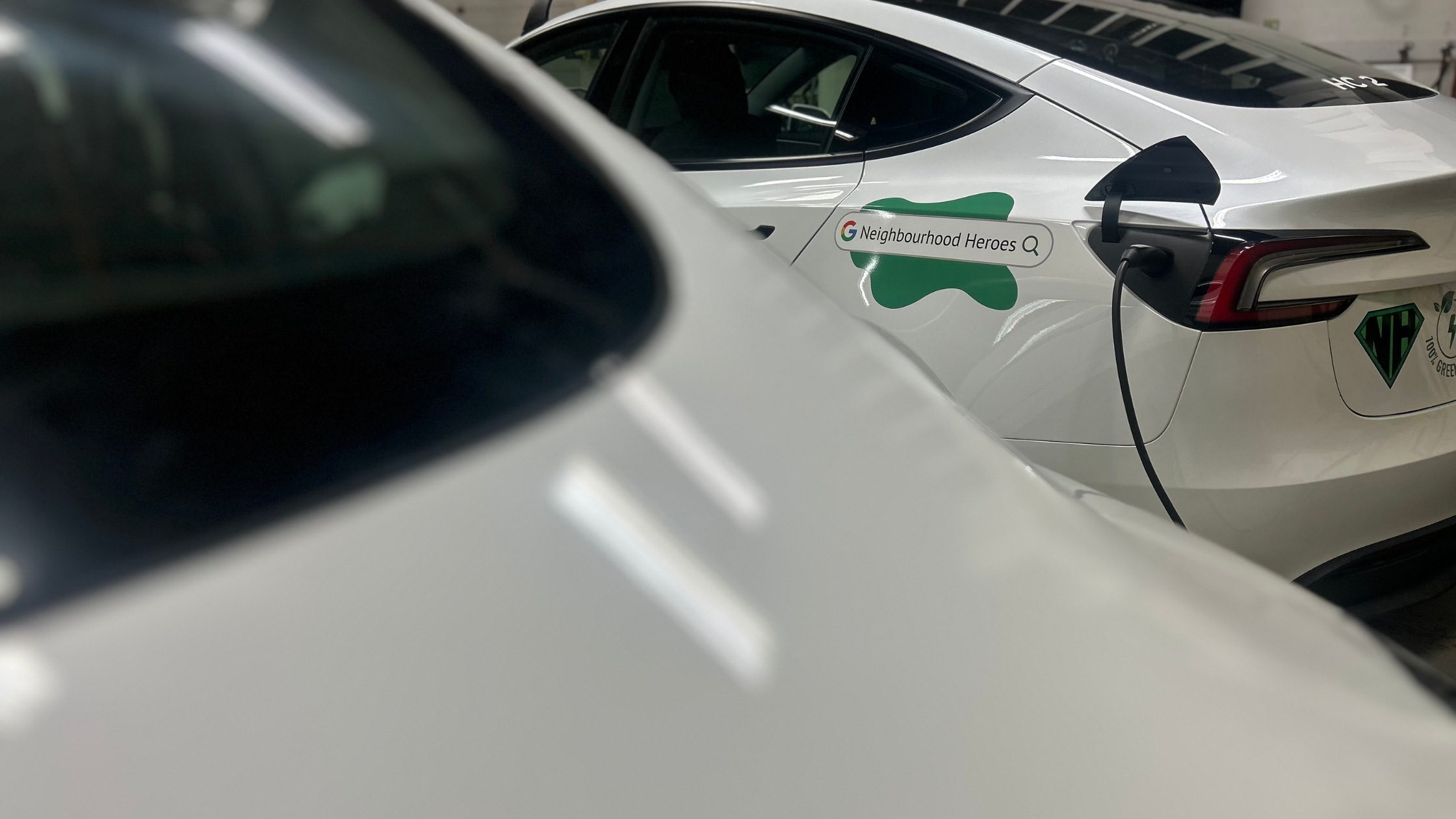
We use Tesla Model 3s in the fleet because they align with our operating philosophy: cleaner, lower-maintenance, quieter, and more modern service.
Tesla says its vehicles do not require traditional oil changes, fuel-system maintenance, spark plug replacements, or emissions checks, and that brake pad replacements are less frequent because regenerative braking reduces wear. That kind of lower routine maintenance burden matters in a service business. Spending less time on traditional gas-vehicle maintenance means more focus on running the day.
There is also the homeowner-facing side.
Instead of a dirty old gas truck idling outside the property, a sleek electric sedan arrives at the home. That creates a different impression immediately. It feels cleaner, quieter, and more professional in a neighbourhood service business, which matters more than some companies realize.
Why safety matters in the fleet
Safety is not a side note when your team is on the road every day.
The Tesla Model 3 also has strong safety credentials. The Insurance Institute for Highway Safety lists the 2025 Tesla Model 3 among its Top Safety Pick winners, and Tesla states that the Model 3 includes active safety features, such as automatic emergency braking, as standard.
That does not mean a car is magic, and it does not replace safe driving. But in a real operating environment, strong safety engineering and modern driver-assistance systems are meaningful advantages.
Why data makes the fleet smarter
This is where the electric fleet becomes more than a transportation choice.
Tesla vehicles collect and surface useful trip and vehicle information through their connected software ecosystem, including trip history, charging data, and energy-use visibility. For a service business, that matters because it helps turn the fleet into a management tool rather than just a way to get around.
That kind of visibility can help with:
* route planning
* energy-use tracking
* daily movement analysis
* operational review
* identifying wasted time or inefficient travel patterns
The real value is not “we have data.” The real value is that the data can help us manage the day more clearly and make better operating decisions over time.
That is what a modern fleet should do.
Why does this feel different for homeowners?
The homeowner does not usually care about fleet theory. They care about how the service feels.
An electric fleet changes that experience in a few obvious ways.
It is quieter.
It is cleaner.
It avoids fuel smell on-site.
It reduces the visual and sensory mess that people associate with older gas-powered lawn care operations.
It feels more modern and more intentional.
That is especially important in Edmonton neighbourhoods, where more people work from home, more families have pets and young children, and more homeowners care about how service companies present themselves at their homes.
The difference is not just environmental. It is experiential.
Why this matters in Edmonton neighbourhoods
Edmonton is not a place where lawn care happens in isolation. It happens in proximity to other people.
A quieter, cleaner operating model matters more when:
* neighbours are nearby
* people are working from home
* pets are in the yard
* children are around
* homeowners care about curb appeal and neighbourhood feel
That is why our electric fleet matters beyond the sustainability conversation. It supports a service style that better fits modern residential neighbourhoods than a louder, dirtier, gas-heavy model.
The bigger point: this helps us control costs too
One of the biggest misunderstandings about electric operations is that they are only about branding or emissions.
They are also about operational discipline.
When your mowing equipment is low-maintenance, when you are not handling gas on-site, and when your service vehicles do not require traditional gas-vehicle maintenance tasks like oil changes and fuel-system service, you reduce friction in the system.
That helps us run leaner and more efficiently. And when a company operates more efficiently, it is better positioned to keep costs under control for the neighbours it serves.
That is the part people often miss. The value of an electric fleet is not just what it says about the brand. It is what it does for the operation.
The future of lawn care in Edmonton is quieter, cleaner, and smarter.
Electric lawn care is not just about replacing one tool with another. It is about building a better system.
For us, that system includes:
* 100% electric mowing equipment
* battery-based workflow instead of fuel handling
* Tesla Model 3 service vehicles
* lower routine vehicle maintenance
* quieter neighbourhood presence
* cleaner job-site experience
* better operational visibility through vehicle data
That combination helps us run a lawn care company that feels more modern, works more cleanly, and operates more efficiently in Edmonton.
And that matters because homeowners are not just buying grass-cutting. They are buying the experience of how the service is delivered.
The bottom line
Our electric fleet is not just a branding choice. It is an operating advantage.
Electric mowing equipment helps us reduce fuel handling, avoid spills and fumes, and keep the mowing operation cleaner and more dependable. Tesla Model 3 service vehicles reduce traditional maintenance needs, bring strong safety credentials, and help us run a more data-informed fleet.
For Edmonton homeowners, that means lawn care that feels:
* quieter
* cleaner
* more modern
* less disruptive
* more efficient
That is the kind of lawn care system we believe neighbourhoods deserve.