
weed control Edmonton
Edmonton


Maintaining a beautiful lawn requires more than just occasional mowing. A successful lawn care schedule revolves around timing and consistent maintenance throughout the year. From feeding your grass at the right time to tackling pests and weeds effectively, a well-organized lawn care schedule makes sure your yard stays lush and vibrant season after season.
It all starts with understanding the seasonal needs of your lawn and planning ahead. A solid year-round lawn care plan allows you to tackle each task when it matters most.
Every lawn has its own requirements based on the grass type, the local climate, and the time of year. Knowing these factors is key to developing a lawn care schedule that addresses the needs of your turf.
Grasses generally fall into two categories: cool-season and warm-season. Cool-season grasses grow best in cooler weather, thriving in spring and fall. Warm-season grasses prefer hot weather and grow most during late spring and summer.
As you create your lawn care schedule, understanding your grass type will guide how you approach tasks like fertilization, watering, and pest control. The following sections outline a month-by-month lawn care calendar to help you maintain your lawn all year long.
November-February: Preparing for the Season Ahead
During the winter months, your lawn likely enters a period of dormancy. This means your grass stops growing, but that does not mean you should stop planning. January and February are the perfect months to prepare for the spring.
This is a time to review the previous year’s lawn care results, evaluate your equipment, and plan for improvements. If you have any lawn care equipment, such as a mower, now is a good time to inspect and prepare it for the season.
This is also a great time to book services like deep-core aeration or electric lawn mowing, which can be scheduled for the spring. Electric lawn mowing is an environmentally friendly option that produces zero emissions and creates a quiet, clean cut for your lawn.
As the weather warms up, it is time to start preparing your lawn for its active growth period. March marks the transition from winter to spring, and there are a few important tasks to get done. Begin with a thorough cleaning of the lawn.
Clear away any dead grass, fallen leaves, and other debris that may have accumulated over the winter months. Clearing the lawn allows sunlight to reach the soil and encourages healthy new growth.
After cleaning, check the ground temperature. If the soil has warmed up to around 50°F (10°C), you can start your lawn care process.
You may want to consider applying a pre-emergent herbicide. This product prevents weed seeds from germinating, giving your grass the best chance to establish itself without competition. However, timing is everything with pre-emergent herbicides. Apply them too early, and they will prevent your grass from growing, too. Apply them too late, and weeds may have already started to sprout.
March is also a great time to test your soil. Knowing your soil’s pH level and nutrient content is key to determining what kind of fertilization your lawn needs. Use a soil test kit to analyze your soil’s current condition and decide on the best fertilization schedule for your lawn.
March – April is a great time to prepare your lawn for the upcoming growing season. As the soil begins to warm up, it’s an ideal period to fertilize cool-season grasses. Based on your soil test results, you can apply a fertilizer tailored to your lawn’s needs. Look for a fertilizer that balances key nutrients like nitrogen, phosphorus, and potassium to support healthy grass growth. Avoid over-fertilizing, as it can harm your lawn and lead to nutrient runoff.
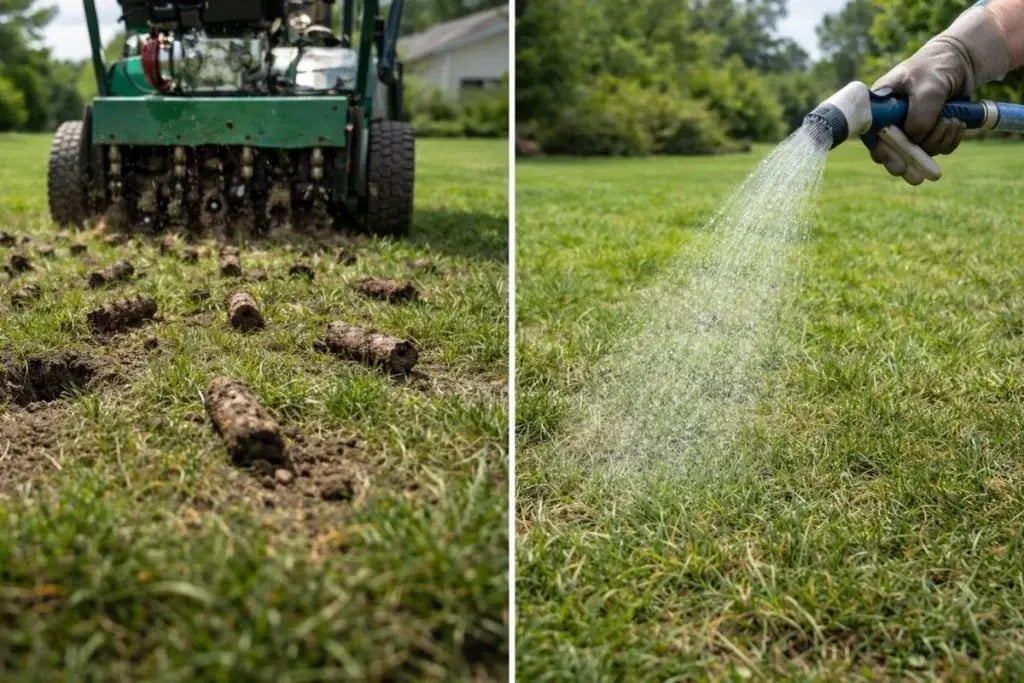
In May, we begin our fertilization and aeration services. Core aeration, which involves perforating the soil with small holes to relieve compaction, improves air, water, and nutrient flow to the roots. This process helps your lawn thrive by promoting deeper root growth and allowing the grass to absorb more nutrients and water. We offer professional aeration services as part of our comprehensive lawn care packages.
If your lawn has bare spots or thinning grass, May is also the perfect time to overseed. Spreading seed over the lawn encourages thicker growth and fills in gaps, making a noticeable difference in the health and appearance of your lawn.
In May, the growing season is in full swing. It is a time for regular maintenance to keep your lawn looking its best. Begin mowing once the grass has reached around 2 to 3 inches tall. Be sure to follow the “one-third rule”—only cut a third of the grass blade’s height at a time. Cutting too short can weaken the grass, leaving it vulnerable to pests and disease.
This is also a great time to apply a weed control treatment. Even if you used a pre-emergent herbicide earlier in the season, there may still be weeds that require attention. Depending on the type of weeds, you can apply a selective herbicide to target broadleaf weeds or grassy weeds.
Consider using eco-friendly alternatives to traditional herbicides, which are often less harmful to the environment. At Neighbourhood Heroes, we offer vegetation control services that are effective and environmentally safe. Additionally, we provide weekly lawn mowing through our Paradise Green’s package.
Summer brings warm weather, and your lawn needs a bit of extra attention. This is the time when warm-season grasses are in their prime, but even cool-season grasses need some maintenance during this period.
Continue mowing regularly, keeping the grass height around 3 inches. Taller grass encourages deeper root growth and helps shade the soil, preventing excessive moisture loss.
In terms of watering, it is important to hydrate your lawn deeply but infrequently. Watering deeply encourages the grass to develop deep roots, which makes it more drought-resistant.
Aim to water early in the morning to reduce evaporation and allow the water to soak in deeply before the heat of the day. If you use an irrigation system, adjust it to match the local weather conditions to avoid over-watering.
If you have been dealing with pests, diseases, or weeds, now is the time to act. Apply insecticides or fungicides as needed to address specific issues. During the summer months, pests like grubs and chinch bugs can harm your grass, while diseases such as brown patches may appear in humid conditions.
As the weather starts to cool, September signals the beginning of fall lawn care. For cool-season grasses, this is the time to apply fertilizers and promote root development. Fertilize your lawn to encourage strong roots before the winter months arrive. Like in the spring, soil testing is recommended to understand if your lawn needs any specific nutrients.
Aeration is also beneficial in the fall. Performing core aeration helps relieve compaction and promotes better water and nutrient absorption as the lawn prepares for winter dormancy. We offer aeration as a standalone package, as well as part of our Paradise Green’s package, providing you with comprehensive lawn care solutions tailored to your needs. Overseeding can be done in September to promote thicker growth before the colder months set in.
By October, most grass types are slowing down as they enter dormancy for the winter. This is an excellent time to apply a final round of fertilizer to make sure that your lawn is in the best possible shape before the harsh winter months. The fertilizer applied in October helps nourish the roots and supports recovery when the grass begins to grow again in the spring.
Hand-raking leaves and removing debris is a necessary task in October. Accumulated leaves can smother the grass, blocking sunlight and promoting mold growth. Keep your lawn clear to help it breathe and make sure that it stays healthy through the colder months.
In late fall, you can also consider applying a winterizing fertilizer to support root development during the dormant period.
During the winter months, your lawn enters a period of dormancy. However, the work is not yet over. Winterizing your lawn involves protecting it from the cold and preparing it for the spring. Avoid heavy foot traffic on your lawn to prevent soil compaction.
If you live in an area with snow, consider using a snow blower to remove snow from your lawn, which can otherwise block airflow to the grass.
At Neighbourhood Heroes, we understand that a well-maintained lawn requires consistent care and attention year-round. Our expert team offers tailored lawn care services that take the guesswork out of maintaining your lawn, from spring fertilization to winterizing your yard.
Reach out to us today to get started on the best lawn care schedule for your yard.
A healthy, vibrant lawn doesn’t happen by chance — it requires consistent care and planning. Creating a lawn maintenance schedule ensures your grass stays lush, resilient, and weed-free throughout the growing season. Whether you’re a beginner or seasoned homeowner in Edmonton, a structured approach makes lawn care more manageable and effective.
Before setting a schedule, understand your lawn’s current condition:
Mowing is essential for a tidy and healthy lawn.
Water deeply but infrequently to encourage strong root growth.
Feeding your lawn provides essential nutrients for growth.
Regularly inspect your lawn for weeds, pests, and disease:
Your lawn care schedule should change with the seasons: