
weed control Edmonton
Edmonton
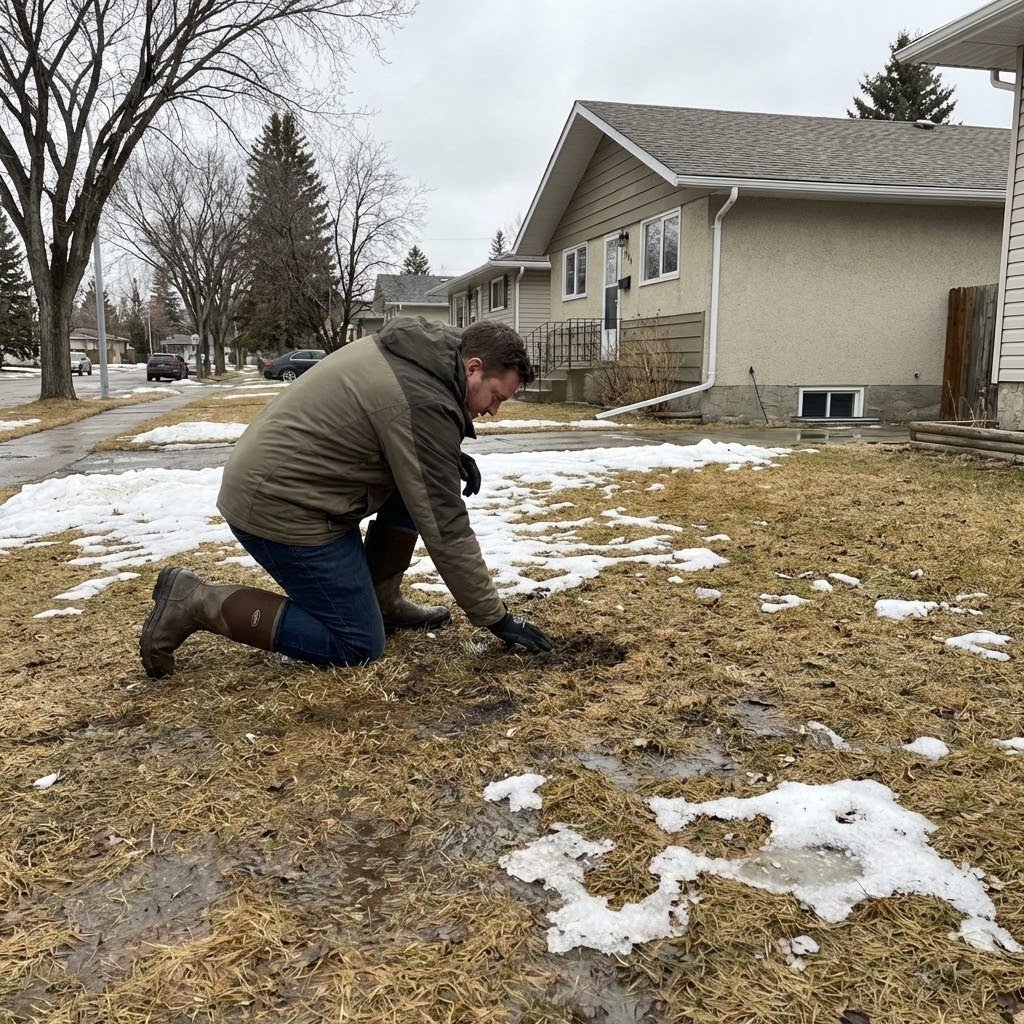

If you are trying to figure out when your lawn is actually waking up, when it is safe to start spring yard work, or whether the ground is truly ready for seed, frost dates alone are not enough. Edmonton homeowners need to understand three things together: freeze-thaw cycles, historical frost timing, and soil temperature.
Here is the short version. Edmonton’s long-term average last spring frost is May 27, its average first fall frost is September 10, and its average frost-free period is 106 days based on the 1991 to 2020 climate normals for Edmonton International Airport. Those dates are useful baselines, but they are not guarantees. Alberta’s frost tools also focus on probable freezing dates across multiple temperature thresholds, which is a more realistic way to think about risk than one so-called “safe” date.
The real takeaway is simple. If you want better spring lawn and yard decisions in Edmonton, do not rely on one warm weekend or one average date. Watch the bigger picture.
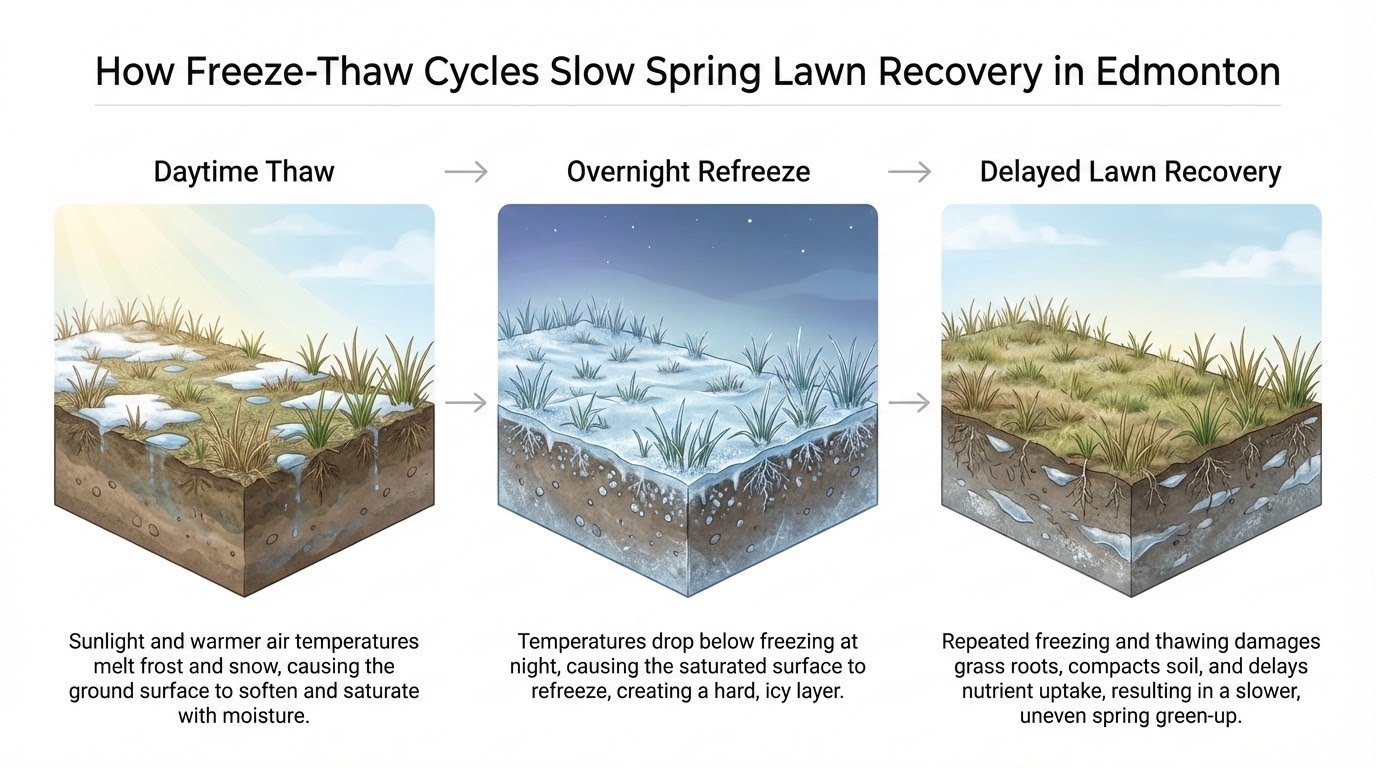
Freeze-thaw cycles are exactly what they sound like. The temperature rises enough during the day for surface thaw, then drops low enough to freeze again. In Edmonton, this pattern is common in late winter and spring.
Why does that matter for homeowners?
Repeated freezing and thawing can delay lawn recovery, keep soils unstable, and make your yard look more ready than it actually is. A lawn can appear exposed and partially green while the soil beneath remains cold, uneven, and slow to support true growth. That is one reason homeowners often move too early with spring cleanup, overseeding, or garden work.
The mistake is assuming visible thaw equals real readiness. It does not.
Historical frost dates are useful, but only if you interpret them properly.
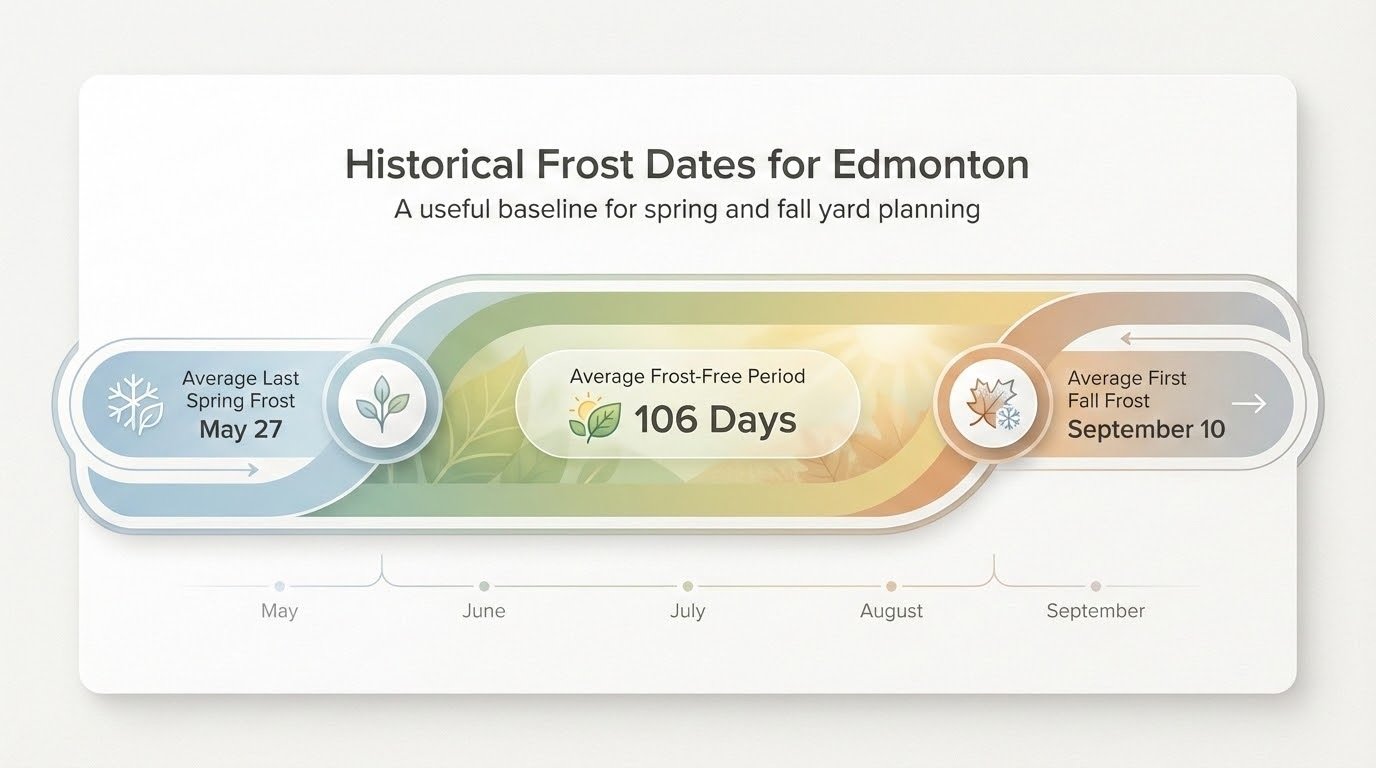
For Edmonton, the strongest baseline figures are:
These numbers tell you what is typical over the long run. They do not tell you exactly what will happen in your yard this year.
That distinction matters. If you treat a historical average like a guarantee, you are likely to move too early in some years and too late in others. Alberta’s ACIS tools are better in this regard because they frame frost as probability and threshold risk, rather than a single rigid date.
For homeowners, the practical message is this: use historical frost dates as your baseline, then adjust based on current weather and soil conditions.
Most people pay attention to air temperature. The smarter move is to monitor soil temperature as well.
That is because your lawn, seed, and roots do not respond to a sunny afternoon the same way you do. They respond to the ground's temperature. Missouri Extension notes that cool-season grasses have their best root growth when soil temperatures are around 50 to 65°F (10 to 18 °C). That matters in Edmonton because cool-season lawns dominate here.
So if the air feels pleasant but the soil is still cold, your lawn may still be behind. That is one of the biggest reasons spring timing gets misread.
In practical terms, Edmonton homeowners should pay attention to the trend rather than a single reading.
A few mild days do not mean the soil has meaningfully warmed. A surface layer can thaw while the deeper zone, where the seed and roots matter, is still lagging. That is why soil temperature is more useful when tracked across several mornings.
This is also where Edmonton’s climate can mislead people. One warm spell can create false confidence, especially if a cooler pattern follows right after. As of April 13, 2026, Environment Canada’s Edmonton forecast still showed overnight lows dipping below freezing later that same week, which is exactly the kind of pattern that makes “it feels warm out” a weak decision rule.
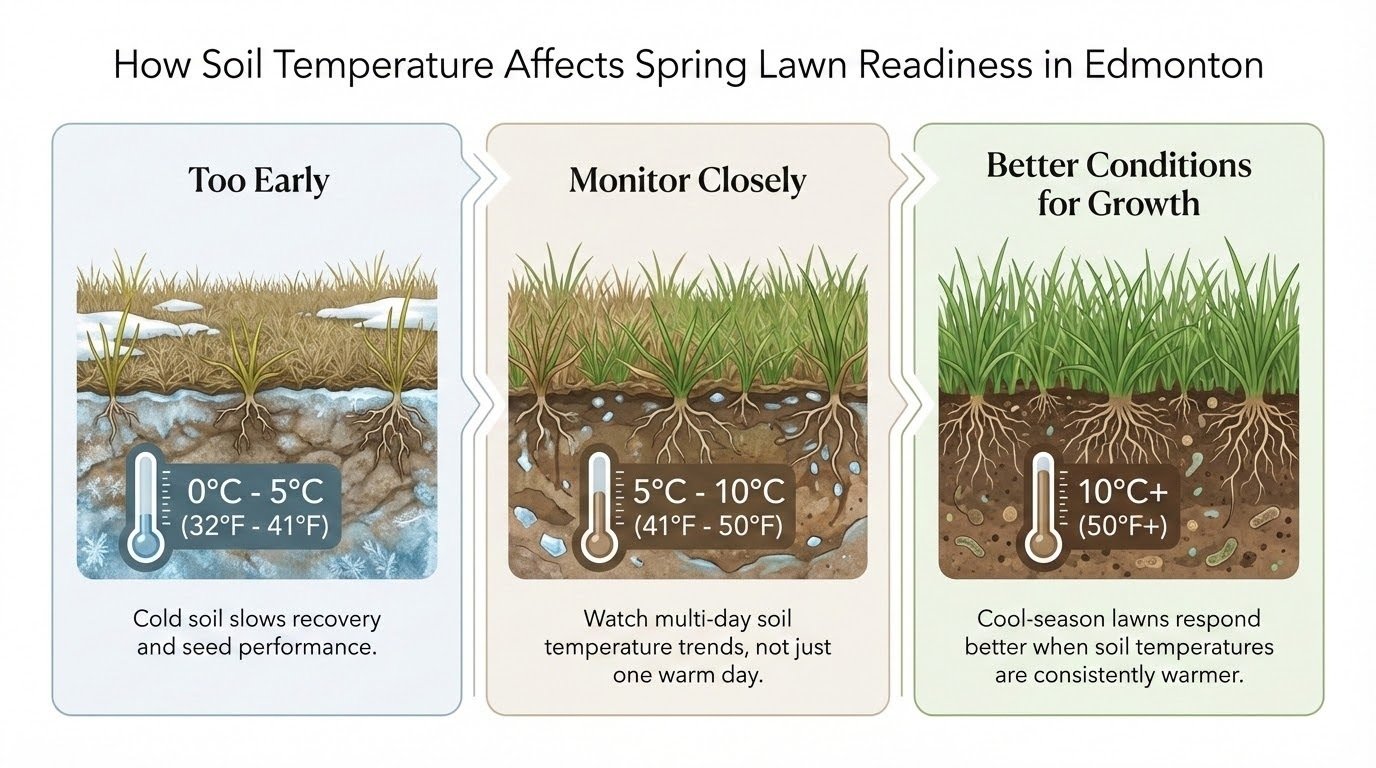
The better question is not “Did we hit 12 degrees this afternoon?” The better question is “What has the soil been doing consistently over the last several days?”
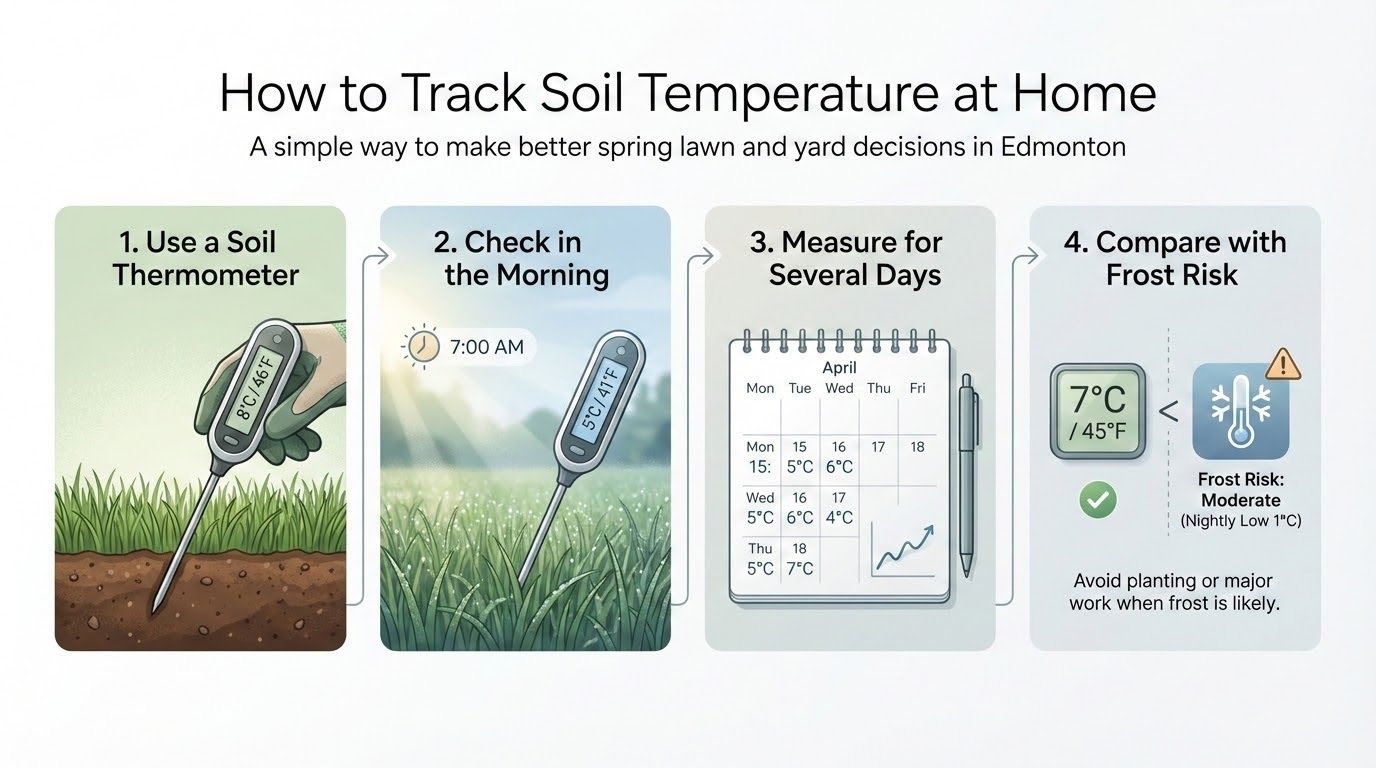
The good news is that you do not need a complicated setup to do this properly.
A simple soil thermometer is enough for most homeowners. Illinois Extension recommends checking soil temperature in the morning because soils are coolest and more stable between about 6 and 8 a.m. It also recommends taking readings over several days and averaging them rather than relying on a single number.
That is the right method for Edmonton, too.
A simple routine looks like this:
That gives you a much more realistic picture of whether your lawn or garden is actually ready.
You do not need special software to create a basic home tracker.
The easiest version is just a note on your phone or a small spreadsheet with:
That is enough.
If you want to be more detailed, add:
That helps because Edmonton yards don't all warm up at the same pace. A sheltered inner-city yard and an exposed edge-of-city property can behave very differently.
Keep this simple.
For most homeowners, the right tool is:
You do not need an elaborate commercial weather station to make better lawn decisions.
What matters more is consistency. A simple tool used properly is more valuable than a fancy tool used randomly.
So if you are buying one, prioritize clarity and ease of use over gimmicks.
This is where the information becomes useful.
If your lawn still looks brown or slow, check whether the soil is actually warming. A yard can thaw visually before it is active enough to recover properly.
Do not rush because one weekend looks nice. Seed needs conditions that support establishment, not just optimism. The trend in soil temperature plus frost risk is a smarter guide than either alone.
Historical frost dates matter, but current frost risk still matters more in the moment. Use both.
If the ground is still going through repeated freeze-thaw swings, it may be too early to assume full readiness.
That is the bigger pattern Edmonton homeowners need to understand. Outdoor timing decisions are stronger when based on conditions, not on impatience.
One of the most useful ways to make this information more local is through community-focused data sharing.
That can be simple:
This matters because Edmonton is not one uniform microclimate. Conditions can differ across neighbourhoods and property types. Alberta’s climate tools already draw on broad station networks and mapped climate data. Community-level observations add the local detail that broader systems cannot always show at the yard level.
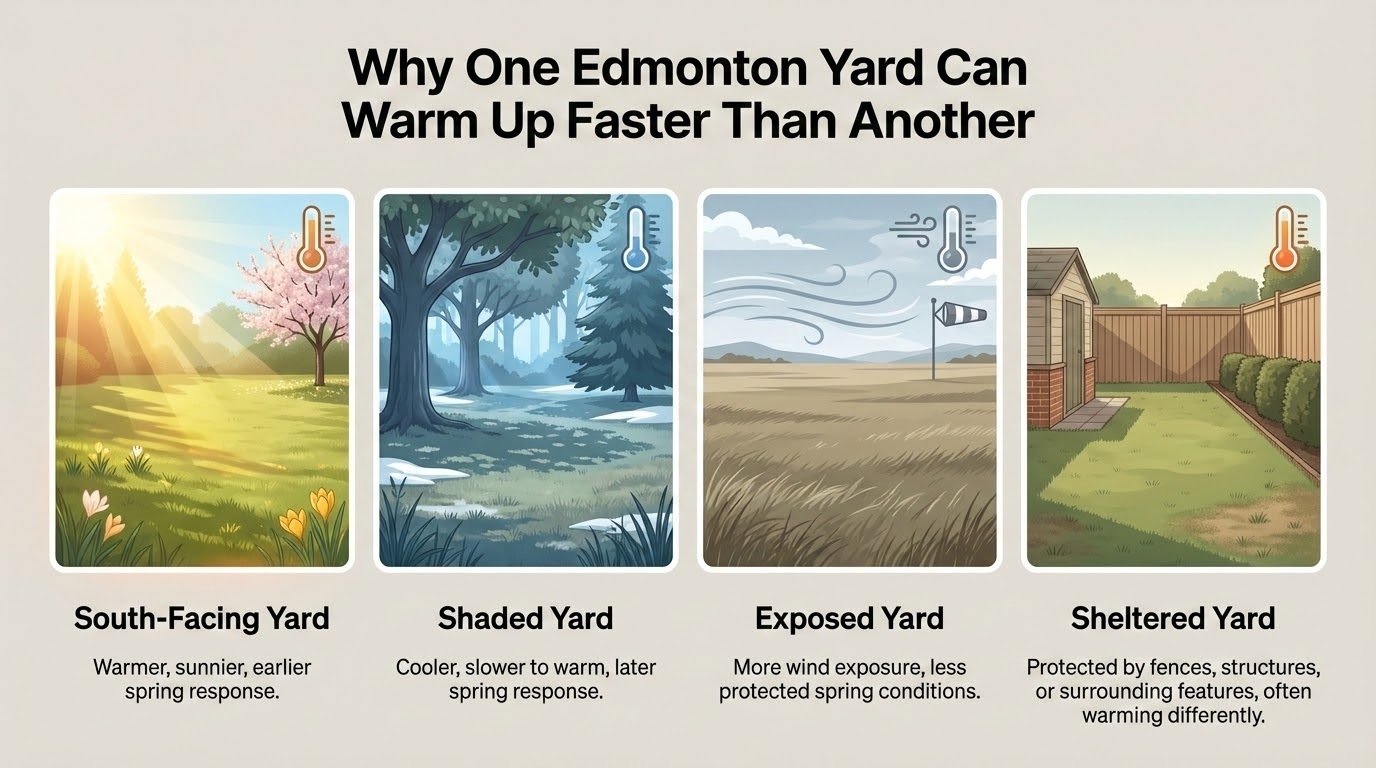
The important caveat is this: neighbour observations are useful context, not a replacement for official weather and climate data.
Here is the cleanest way to use all of this.
First, check the historical Edmonton frost baseline so you understand the normal seasonal window.
Second, check the current frost risk instead of assuming the average date settles it.
Third, track soil temperatures over several mornings.
Finally, compare all of that to what your own yard is doing.
That is the best way to avoid getting fooled by appearances.
Edmonton homeowners do not need more vague spring advice. They need a better way to read real conditions.
That starts with understanding that freeze-thaw cycles can delay yard readiness, historical frost dates are useful but limited, and soil temperature is one of the most practical at-home signals you can track. Once you understand those three things together, it becomes much easier to make smarter decisions about your lawn, garden, and spring yard work.
So the best approach is not to ask for a single magic date, but to start tracking the full picture.
Because in Edmonton, that is what actually leads to better timing.
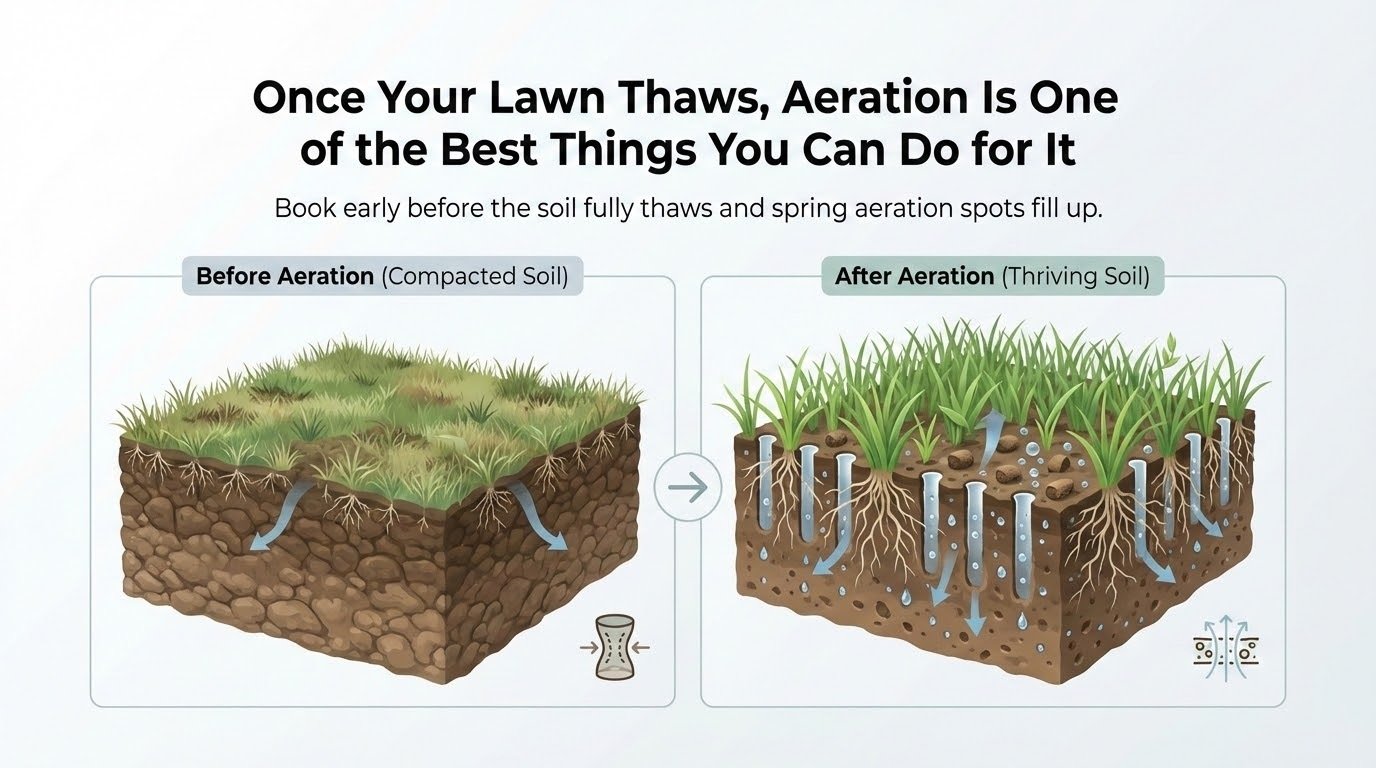
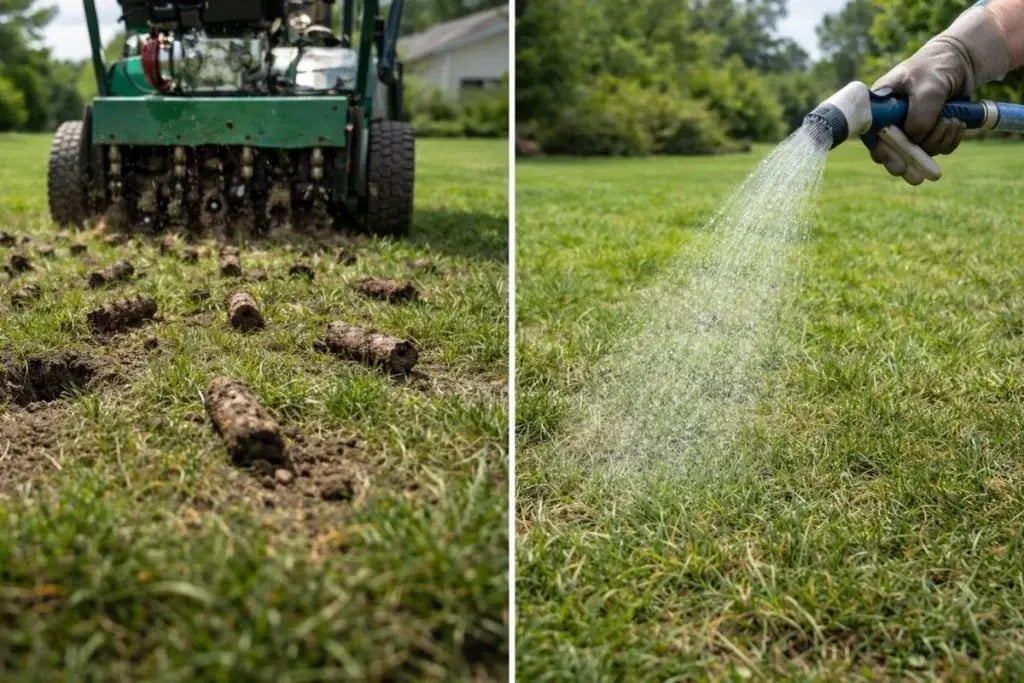
Now...when your lawn finally thaws, do not just wait and hope it bounces back on its own. For many Edmonton lawns, deep core aeration is one of the best spring services you can book. It helps relieve compaction, improves root-zone airflow, and provides your lawn with a stronger, healthier foundation for growth throughout the season. Since the aeration season fills up quickly once the ground is ready, the best move is to get booked now before the soil fully thaws and availability becomes limited. Follow this with our Weed Control Service and your lawn is off to the races.