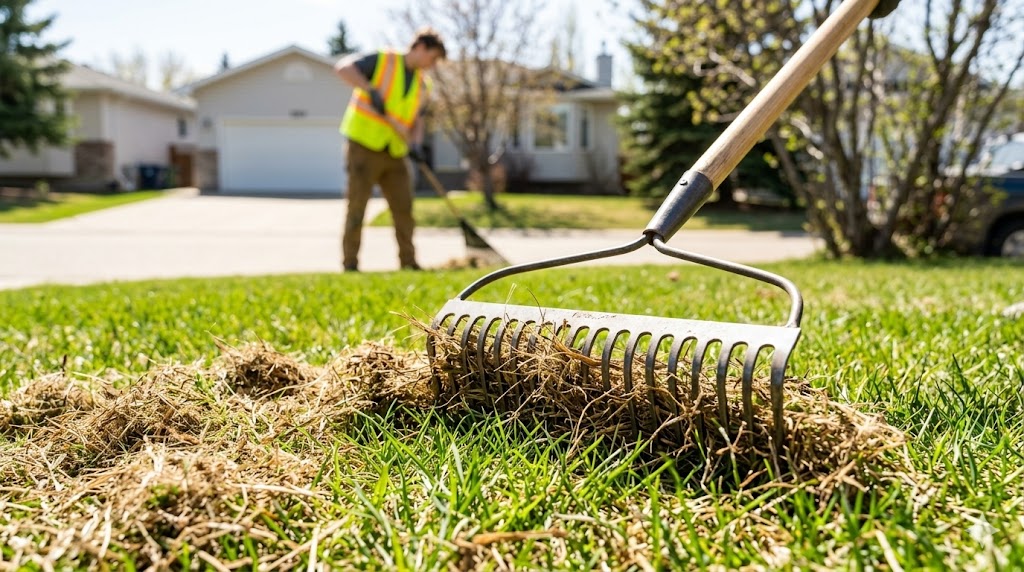
Every spring, Edmontonians hear the familiar, aggressive roar of gas-powered power rakes tearing up neighborhood lawns. We've been conditioned to believe that dethatching is a mandatory annual chore.
But at Neighbourhood Heroes, we believe in working with nature, not fighting it.
The candid truth? Most lawns are dethatched way too often. Aggressive power raking can actually severely stress your grass, ripping up healthy crowns and leaving your yard vulnerable to weeds and disease. We go over this in depth in our Ultimate 2026 Edmonton Spring Lawn Care Guide
Here is the straightforward guide on how to manage thatch, how often you really need to deal with it, and why there is usually a better, eco-friendly solution.
What is Thatch (And Is It Bad?)
Thatch is a tightly intermingled layer of dead and living grass shoots, stems, and roots that accumulates between the green vegetation and the soil surface.
A little thatch is actually a good thing! A thin layer (less than ½ inch) acts like natural mulch. It insulates the soil against extreme Edmonton temperature swings, retains moisture during dry spells, and gives your lawn that soft, cushiony feel.
Thatch only becomes a problem when it gets thicker than ½ to 1 inch. At that thickness, it acts like a sponge, blocking water, air, and fertilizers from reaching the roots where they are needed.
The "Finger Test": How to Check Your Thatch
Before you rent a power rake, check if you actually need it.
- Push your finger through the green grass down into the soil.
- If it feels extremely spongy and you have to push through more than an inch of brown, matted material before hitting firm dirt, your thatch is too thick.
So, How Often Should You Dethatch?
If you have a severe thatch problem (over 1 inch thick), you should dethatch only when necessary - usually no more than once every 2 to 3 years. If you maintain your lawn properly with regular, clean cutting (using sharp electric mowers) and smart watering, you may never need to aggressively dethatch your lawn.
The Neighbourhood Heroes Solution: Deep-Core Aeration
If your lawn is feeling suffocated, aggressive dethatching is often treating the symptom, not the root cause. The real issue is usually soil compaction and a lack of microbial activity.
Instead of tearing up your lawn, we highly recommend Deep-Core Aeration in the spring or fall.
Why Aeration is the Eco-Friendly Choice:
- Natural Thatch Breakdown: Aeration pulls plugs of soil and deposits them on top of the thatch layer. This introduces beneficial soil microbes to the thatch, which naturally eat and break down the dead organic matter.
- Relieves Compaction: It opens up the soil, allowing roots to breathe and driving water and our eco-friendly liquid fertilizers deep into the ground.
- Less Damage: Aeration is far gentler on healthy grass crowns than the spinning metal tines of a power rake.
Read more about preventing compaction here: How Do I Prevent Soil Compaction?
How to Keep Thatch Under Control Naturally
Want to skip the power rake forever? Follow these student-approved, sustainable lawn care habits:
- Mow regularly: Don't let the grass get too long. We use precision electric mowers to keep lawns at the optimal height.
- Don't over-fertilize with synthetic nitrogen: Fast, forced growth leads to excessive thatch. We use balanced, liquid fertilization that feeds the lawn at a steady, healthy rate.
- Stick to a schedule: Consistency is key. (Check out our guide: How Do I Create a Lawn Maintenance Schedule)
Ready to help your lawn breathe the natural way?
Skip the destructive power raking this year. Let our team pull the plugs and feed your soil the right way.
A healthy lawn needs more than just watering and mowing — it needs to breathe. Over time, your lawn can develop a thick layer of thatch, which blocks nutrients, air, and water from reaching the soil. If you’re noticing spongy grass or brown spots despite proper care, it may be time to dethatch. Here’s how to do it right in Edmonton’s climate.
What Is Thatch?
Thatch is a layer of dead and living organic matter (like roots, stems, and lawn clippings) that builds up between the grass blades and the soil. A little thatch is natural and healthy, but more than ½ inch can suffocate your lawn and attract pests and disease.
Signs Your Lawn Needs Dethatching
You may need to dethatch if:
- Water runs off instead of soaking in
- The lawn feels spongy when you walk on it
- Grass appears weak or patchy despite fertilization
- You see a visible mat of brown material when you dig down
When to Dethatch in Edmonton
In Edmonton, the best time to dethatch is late spring or early fall when the lawn is actively growing. Avoid dethatching during hot summer months or winter dormancy, as it can stress the grass.
How to Dethatch Your Lawn
1. Check the Thatch Layer
Use a spade or soil probe to remove a small wedge of your lawn. Measure the thatch layer—if it’s more than ½ inch thick, it’s time to dethatch.
2. Choose a Dethatching Tool
- Manual Rake: Best for small areas or light thatch buildup.
- Power Dethatcher (Vertical Mower): Ideal for larger lawns or thick thatch.
- Tow-Behind Dethatcher: Good for those with ride-on mowers.
Tip: For tougher lawns, reciprocating machines like those used in our Deep-Core Aeration service can also assist in improving soil contact after dethatching.
3. Mow Your Lawn Short
Cut your grass to about 2 inches before dethatching. This makes the process easier and reduces stress on the grass.
4. Dethatch in Multiple Directions
Run the dethatcher over your lawn in one direction, then again at a perpendicular angle to loosen the thatch evenly.
5. Rake and Remove Debris
After dethatching, rake up and dispose of the loosened material. This is critical to give your grass room to recover.
6. Overseed and Fertilize
Your lawn will be stressed after dethatching. Overseed any thin areas (read our overseeding guide), and apply a balanced liquid fertilizer to encourage quick recovery.
7. Water Lightly
Water the lawn lightly over the next several days to help the grass recover. See our watering guide for Edmonton for more details.
Or Leave It to the Pros
Dethatching can be physically demanding and requires the right equipment. At Neighbourhood Heroes, we focus on healthy, green, and eco-friendly lawns — and we’re happy to do the heavy lifting for you. Check out our Ultimate 2026 Guide for Edmonton Spring Lawn Care to make sure you don't miss anything!
👉 Contact us to request dethatching or combine it with other seasonal lawn services.
![Neighbourhood Heroes Superman logo[668]-2-2](https://web.neighbourhoodheroes.ca/hs-fs/hubfs/Neighbourhood%20Heroes%20Superman%20logo%5B668%5D-2-2.png?width=3000&height=2385&name=Neighbourhood%20Heroes%20Superman%20logo%5B668%5D-2-2.png)