A vibrant, healthy lawn in Alberta depends as much on proper watering as on mowing and fertilizing. Because our province’s climate swings from dry, hot summers to cold winters, getting your watering schedule—and duration—right is crucial. Water too little and your grass will brown and thin; water too much and you risk disease, shallow roots, and wasted resources.
In this guide, we’ll cover:
Alberta’s climate impacts
Seasonal watering frequency & duration
Best time of day to water
Adjusting for grass type and soil
Signs your lawn’s getting too little—or too much—water
Tips for efficient, eco-friendly irrigation
1. Alberta’s Climate and Your Lawn’s Needs
Alberta summers range from warm and dry in the south (Calgary, Lethbridge) to more humid in the north (Edmonton). Annual rainfall is modest—often less than 400 mm—so supplemental irrigation is almost always necessary. However, cooler spring/fall temperatures and morning dew can reduce how much—and how often—you need to water.
2. Seasonal Watering Frequency & Duration
Season
Frequency
Duration per Session
Spring
1–2 times/week
1 hour
Early Summer
2 times/week
1 hour
Mid–Summer
2–3 times/week
1 hour
Late Summer
2 times/week
1 hour
Fall
1 time/week
1 hour
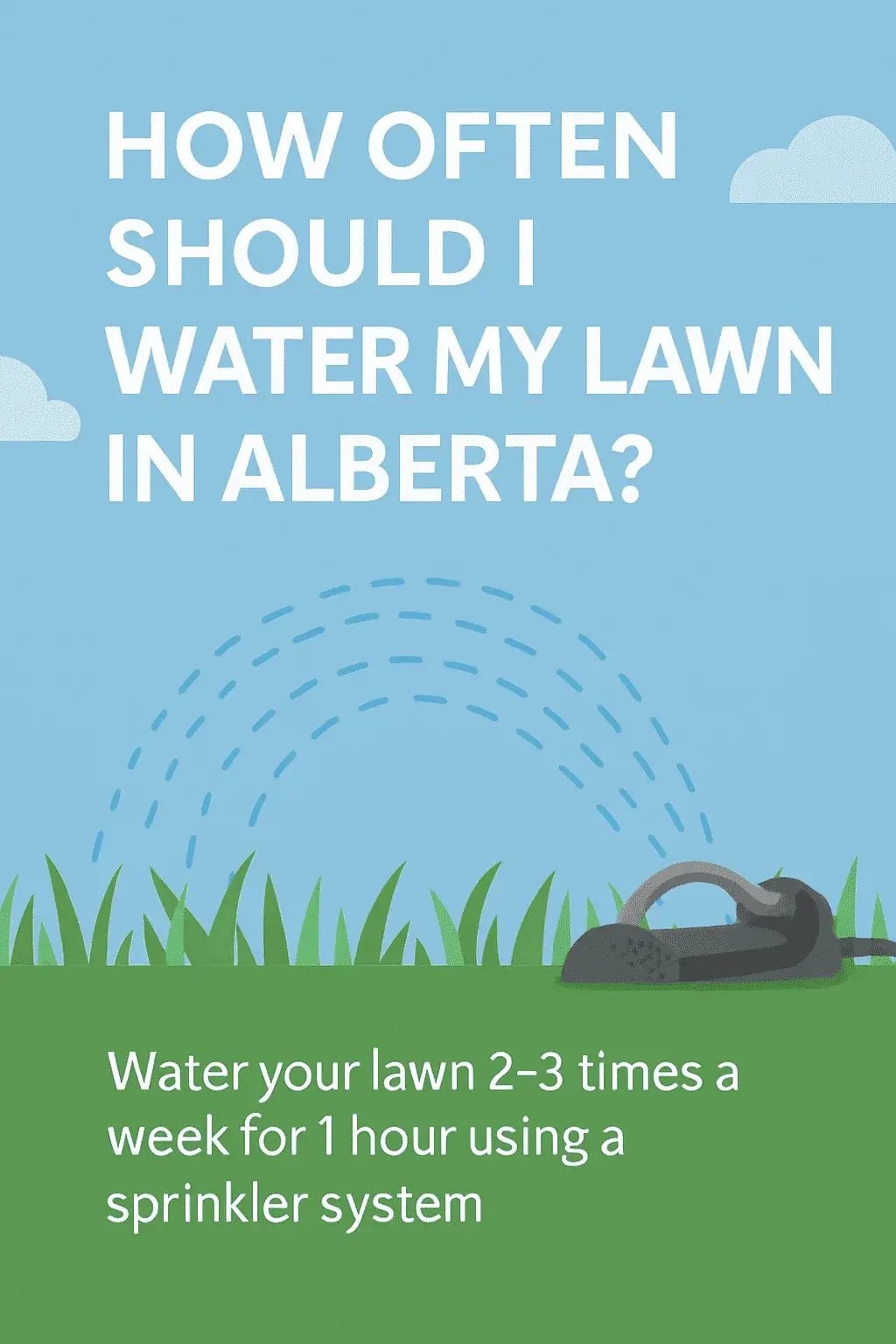
Ideal Routine: Use a sprinkler system for 1 hour, 2–3 times per week during the hottest months to deliver roughly 1 cm (0.4″) of water per session (≈3 cm total per week when including rainfall).
Spring (April–May): 1 ×/week may suffice with spring rains; bump to twice if you hit a dry stretch.
Early Summer (June): Begin watering twice weekly once daytime highs stay above 20 °C.
Mid–Summer (July–August): Increase to three sessions in heatwaves—1 hour each ensures deep soil penetration.
Late Summer (September): Scale back to two sessions as temperatures ease.
Fall (October): One 1-hour soak before first frost helps roots stay strong into dormancy.
Late Afternoon (4–6 PM): Acceptable on very hot days but avoid watering too late.
Avoid Midday: High evaporation rates waste water and can shock grass roots.
4. Tailoring to Grass Type & Soil
Cool-Season Grasses (Kentucky Bluegrass, Fescue, Rye): Thrive on deep, infrequent watering sessions of 1 hour.
Soil Matters:
Sandy soils: Drain faster—stick to 1-hour sessions but consider adding a third session if the soil dries in under 48 hours.
Clay soils: Hold moisture—1 hour every 2–3 days avoids oversaturation.
DIY Test: After a 1-hour sprinkler run, push a screwdriver into the turf—if it slides in easily 10 cm down, roots are getting enough water.
5. Signs of Under- & Over-Watering
Symptom
Under-Watering
Over-Watering
Grass color
Pale blue-green, brown tips
Yellow patches, slimy thatch
Footprint test
Blades stay flattened
Blades spring back soggy
Soil feel
Hard, dry
Soft, muddy
Thatch buildup
N/A
Excessive (fungus risk)
6. Tips for Efficient, Eco-Friendly Irrigation
Rain Sensor or Soil Probe: Automate adjustments to avoid unnecessary 1-hour runs.
Zone Your Sprinklers: Group sun-exposed and shaded areas separately—no overwatering shade zones.
Mulch Grass Clippings: Lock in moisture and cut back on watering needs.
Drip/Soaker Hoses for Beds: Reserve your sprinklers’ 1-hour cycles strictly for turf.
Conclusion For most Alberta lawns, 1 hour per session for each area, 2–3 times a week using a sprinkler system, is the sweet spot—delivering deep watering that builds strong roots without waste. Use this guide to set your schedule and enjoy a greener, more resilient lawn all season long. Feel free to reach out to us if you need more advice.